
Wrestling With Medicare
I retired twelve years ago at age 67. Not by choice, mind you, but because my employer at the time, the College of Marin (Kentfield, CA), thought it was time for me to go. I was not entirely prepared for this particular transition. All of a sudden, I had to thoroughly examine where I was in life, assess my finances, and make some highly consequential decisions.

One of my tasks involved trying to familiarize myself with the Medicare system. I had enrolled at age 65, but I was not relying on it because I was still employed and had a great employer-supplied health plan. Then, there I was: unemployed. I had to get my ducks in a row.
So, okay, the challenge was to figure out Medicare for real. It was not easy. I discovered an astonishingly complicated bureaucracy filled with unfamiliar terminology, competing plans, enrollment periods, coverage rules, and financial consequences. “Fuck. I don’t have time for this” (I thought). Of course, I had to make the time.
To understand the basic choices, I bought the 2014 edition of Medicare For Dummies. For I was truly a dummy. I learned there was Original Medicare, as well as Medigap, prescription-drug coverage, and Medicare Advantage plans. I ultimately went with Medicare Advantage. (These days, 55 percent of eligible Medicare beneficiaries do the same.) The choice offered some welcome familiarity because its premiums, provider networks, copayments, and other mechanics tended to resemble my employer-provided insurance.
I have remained with the same insurer ever since I started. For the most part, I have been satisfied with both the coverage and customer service. But satisfaction does not eliminate the need for vigilance. Every year during open enrollment, I have compared plans, confirmed that my doctors remain in network, reviewed prescription-drug coverage, and calculated the likely overall costs.
This year has been more frustrating than usual. I found that some of the Medicare Advantage providers are different than previous years. My plan is changing its name and increasing its monthly premium by 75%. My prescription coverage is also becoming less generous. A couple of generic meds I routinely take are being moved into a more expensive tier, now subject to a $600 annual deductible, something I have never faced before.

In addition, two more issues have arisen. In the last week, my insurer denied coverage for an epidural steroid injection in my spine, a routine procedure I have received before. It also denied reimbursement for my chiropractic visits, even though I have submitted receipts and received reimbursement for approximately the last four years. Today, I spent a stressful hour on the telephone trying to resolve these issues. That hour represents only the latest installment of the time and energy required to obtain benefits I believed were already included.
I pay attention. I read the annual notices of changes. I know how to work through a bureaucracy, and I am not afraid to ask questions or challenge a decision. Even so, this process is fucking exhausting.
This leaves me deeply concerned for other seniors who may struggle to understand complicated documents, make difficult telephone calls, use online comparison tools, or navigate an appeals process. Television commercials constantly remind us to “check our coverage,” as though it were a simple task. In reality, it takes time, confidence, persistence, and often outside help.
I don’t believe that Medicare beneficiaries, or indeed any person, should need to become insurance specialists merely to preserve access to familiar doctors, medications, and treatments. A plan can change its premiums, drug tiers, network, and benefits from one year to the next. Authorization and reimbursement decisions can arrive without warning, leaving the hapless patient to untangle every difference. This can be crazy-making!
What’s an old guy to do? Aging brings enough challenges on its own. Wrestling with Medicare should not be one of them.
Soundtrack Suggestion
You know that old trees just grow stronger
And old rivers grow wilder every day
Old people just grow lonesome
Waiting for someone to say, “Hello in there, hello”
(“Hello in There” — John Prine)
LCC Board of Education Testimony — October 7, 2026
Here are my remarks made before the Lane Community College Board of Education on October 7, 2026
Members of the Board, President Bulger, President Hadley: Good evening.
My name is Jim Arnold. I am a retired college administrator and former part-time LCC faculty member.

I’m here tonight to speak about the College’s treatment of Richard Riordan. On Sunday, I emailed you my essay summarizing the federal court’s opinion. I hope you had time to review it.
To summarize, briefly:
Richard repeatedly criticized LCC administrators and you, the Board, over program cuts, budget decisions and the data used to defend them. The College responded by banning him from seven properties and blocking his registration until the end of the century.
On September 28th, U.S. District Judge Michael McShane ordered LCC to remove the enrollment hold and allow Richard to return to classes. Although the ruling was preliminary, McShane found that Richard was likely to succeed on his claim that LCC retaliated against him for speech protected by the First Amendment.
The court also found nothing in the record showing that Richard posed a threat. Judge McShane called LCC’s safety argument “anemic and unconvincing” and its sanctions “unreasonable and legally unsupported.”
My recommendations to you are straightforward.

First, commission an independent review to determine who approved the sanctions, what evidence they relied on, why Richard was NOT told what rule he had broken, and why he had no fair chance to respond. Publish the findings and require President Bulger to respond publicly.
Then act on the findings. Correct any unsupported claims in Richard’s file that could harm his education or future employment. Determine what consequences, if any, are warranted for the administrators responsible. And adopt protections requiring notice, access to evidence, a prompt hearing and a fair appeal before any extended campus ban or registration block.
But do not use the review as an excuse to delay what is already due: an immediate public apology from President Bulger and the Board to Richard and the community.
LCC cannot claim to value free speech while punishing criticism that makes its leaders merely uncomfortable. It is time to admit what went wrong, repair the harm and make sure it Never. Happens. Again.
Thank you.
Federal Court Corrects an Injustice
Since spring 2025, I have written five essays* about Lane Community College, examining its divided Board, troubled governance, strained labor relations, budget choices and loss of public trust. Unfortunately, evidence of institutional dysfunction continues to mount. The latest example concerns the College’s treatment of an outspoken student and a Federal judge’s response. It raises basic questions about free speech, administrative power and accountability.
Richard Riordan is an LCC student who challenged the administration and the Board of Education at public meetings and via email. He questioned program cuts, budget decisions and the data used to defend them. LCC responded by banning him from seven college properties and blocking him from registering for classes. On September 28, U.S. District Judge Michael McShane ordered LCC to remove the registration hold and let Riordan return to campus for academic purposes.

The College called these actions a trespass notice and an enrollment hold, bureaucratic labels that obscure their severity. Riordan risked arrest and prosecution if he entered LCC property. His enrollment hold was set to last until December 31, 2099. In practical terms, LCC had expelled him for life.
This ruling is not final. It is a preliminary injunction, an order that applies while the lawsuit continues. Even so, McShane found that Riordan is likely to succeed on his claim that LCC retaliated against him for speech protected by the First Amendment. That is a serious rebuke to President Stephanie Bulger, her administration and LCC’s elected Board.
I am a retired college administrator and former part-time LCC faculty member. Though not a lawyer, I read McShane’s opinion closely and attended every Board meeting where Riordan spoke during public comment. I found him outspoken, rambling, persistent and often sarcastic. McShane described him as “annoying, long-winded, aggressive, hyperbolic, and grandiose.”
But the judge also found “nothing in the record” showing that Riordan posed a threat. He said Riordan’s statements were hyperbole, jokes and political rhetoric, not real threats of violence.
The court’s account of LCC’s response is troubling. During a campus conversation about an upcoming Board meeting, Riordan told Vice President Shelley Tinkham he was “ready for the spin.” Public Safety Director Lisa Rupp then filed a report on Tinkham’s behalf claiming Riordan had “accosted” her. LCC’s Threat Assessment Team then began monitoring Riordan without his knowledge. Dean Carl Yeh and Rupp later told him to stop sending mass emails and to “be careful,” but did not identify any college rule he had broken.
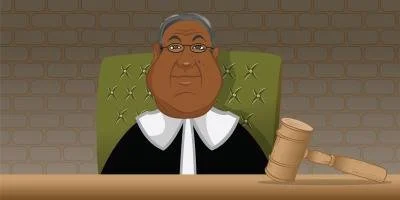
LCC also relied on an email meme and Riordan’s self-deprecating comparison of his writing to a “drive-by shooting.” McShane found that the College took those statements out of context and turned them into threats. He wrote that LCC’s misrepresentation “approaches dishonesty” and said the College appeared to be “covertly building a case” against Riordan.
The judge was just as direct about the harm LCC caused. He wrote that its actions effectively expelled Riordan and would discourage an ordinary person from speaking out. He called LCC’s safety argument “anemic and unconvincing” and its sanctions “unreasonable and legally unsupported.” He said the College’s conduct looked “much like blacklisting.”
McShane accepted that some officials may truly have been afraid. But feeling afraid is not proof that someone poses a threat. The judge allowed Riordan to return for classes but barred him from attending Board meetings in person or approaching the officials named in the suit. He said those limits were meant to calm the situation, not to suggest LCC’s fears had an objective basis.
That difference matters. LCC must act when a threat is credible. But fear alone cannot turn protected political speech into threatening conduct. Before punishing a student, the College must consider the student’s words in context and separate discomfort from a serious threat of violence. Officials may need to remove a student briefly when there is credible evidence of immediate danger. Any longer campus ban or registration block should require written notice, access to the evidence, a prompt hearing and a fair appeal.

Those safeguards are necessary, but they are not enough. President Bulger is responsible for the administration she leads. If she approved these actions, she must answer for a serious abuse of power. If she did not know senior officials were building a case against a student critic and pushing him out of college, then she failed to supervise them. Neither explanation is acceptable.
The Board should commission an independent review to determine who approved the sanctions, what evidence they relied on, why Riordan was not clearly told what rule he had broken and why he had no fair chance to respond. The findings should be made public, and Bulger should be required to answer them.
The Board must then act on those findings. LCC should correct any unsupported claims in Riordan’s records that could hurt his education or employment. The Board should also determine what consequences, if any, are warranted for the officials responsible.
But an independent review should not become an excuse to delay what is already due: a sincere public apology from Bulger and the Board to Riordan and the community. Accountability requires admitting what went wrong, repairing the harm and making sure it does not happen again. Until Bulger and the Board do that, LCC’s claims to value free speech and student rights will ring hollow.
*Here are links to those five publications.