
In Memoriam
Thomas A. Schwandt

Thomas A. Schwandt was a teacher in the most profound sense of that word. When he died right before Christmas, at age 77, the news felt to me like the quiet closing of a chapter that began more than thirty years ago.
I received my Ph.D. from Indiana University in 1995, with Tom as my dissertation director. I learned last November, just after his birthday, that he was ill. Even with that knowledge, the report of his passing landed heavily.
In absolutely no uncertain terms, Tom was the center of my IU graduate-student experience.
Tom began his academic life in English literature before moving toward theology, philosophy, and ultimately evaluation. That trajectory makes perfect sense in retrospect. His work was always animated by questions of meaning and moral judgment. My own undergraduate training was in chemistry, a discipline that demands intellectual discipline, analytic precision, respect for evidence, and humility before complexity. Tom helped me see that those habits of mind need not be abandoned when one enters qualitative inquiry; they must simply be redirected. Under his guidance, rigor became not merely technical exactness, but careful thinking about values, human judgment, and what our conclusions require of us.
His courses in interpretive inquiry and evaluation were, without reservation, the most formative of my time at Indiana. He did not merely perform scholarship; he practiced it carefully and deliberately. His classroom was marked by deep, open-ended questions that slowed thinking down: What does it mean to know? What is the validity of this knowledge claim? What are the ethical and moral responsibilities when working with human subjects? He made it clear that evaluation is not a technical exercise conducted from a position of detached neutrality. It is a value-laden and political practice. The task of the researcher or evaluator is not to eliminate values but to expose them, examine them, and reason together about them honestly.
When he agreed to direct my dissertation, I felt incredibly fortunate as well as challenged. Drafts were returned with precise criticism and unmistakable encouragement. He expected clarity because he assumed I was capable of it. That kind of steady confidence alters a scholar’s sense of himself, whether he is twenty-five or in midlife, as I was.

My career moved toward higher education administration rather than the scholarly life Tom exemplified. Yet his questions accompanied me into leadership roles. From policy development and implementation, to budget deliberations, to the never-ending personnel conflicts, I often heard echoes of his voice: What does this mean? Whose voices are present or absent? Given what we know, what should we do now? What is the right and responsible way to proceed?
When Tom retired in 2015, we exchanged old-school, handwritten notes. In mine, I told him that, with four degrees earned across four different decades, I had experienced dozens, perhaps hundreds, of classroom leaders. Students remember their great teachers, try to forget the terrible ones, and grow hazy about most of the rest. “You,” I wrote, “were in a category by yourself. You were not only among the greats, you were simply the best. In the world of academia, I tell people I got to work with a rock star while doing my doctoral work at IU.”
His reply captured his character perfectly: “… it may make you feel good to know that I doubt I have ever failed to mention your Ph.D. thesis in every qualitative methodology class I have taught! … I have always felt that the real rock stars were the students that I had the great fortune to work with.”
That generosity, that instinct to redirect praise, was quintessential Tom. He saw teaching not as performance but as stewardship.
When I read his obituary, and later the tribute from the European Evaluation Society, with their descriptions of wisdom, integrity, faith, and service, I recognized immediately the same man I had known in front of classrooms decades ago.
Now, in retirement, as I concentrate on reading, writing, and reflection, I recognize how much of my intellectual architecture in later life was formed under his guidance. If there is any seriousness to my thinking, any respect for complexity and moral responsibility, it surely can be traced back to his mentorship.
In 1995, I acknowledged and thanked him as an incredible gentleman and scholar. Thirty some years later, I understand those words even more fully.
I remain deeply grateful that I had the privilege to be his student and colleague.
His questions remain with me. Still.
Soundtrack Suggestion
Across the morning sky,
All the bird are leaving,
Ah, how can they know it’s time for them to go?
Before the winter fire,
We’ll still be dreaming.
I do not count the time
Who knows where the time goes?
Who knows where the time goes?
(“Who Knows Where the Time Goes” – Sandy Denny)
Update on March 11, 2026:
Here’s the link to the video for the Service of Witness to the Resurrection, held for Tom on February 21, 2026, at the First Presbyterian Church in Bloomington, Indiana.
Poetry Selection: Remember Me
To the living, I am gone,
To the sorrowful, I will never return,
To the angry, I was cheated,
But to the happy, I am at peace,
And to the faithful, I have never left.
I cannot speak, but I can listen.
I cannot be seen, but I can be heard.
So as you stand upon a shore gazing at a beautiful sea,
As you look upon a flower and admire its simplicity,
Remember me.
Remember me in your heart:
Your thoughts, and your memories,
Of the times we loved,
The times we cried,
The times we fought,
The times we laughed.
For if you always think of me, I will never have gone.
Margaret Mead
Dear Peter
Peter Yarrow, of Peter, Paul & Mary fame, is currently battling cancer and nearing the end of his days. His daughter, Bethany, has put together a “Peter Yarrow Living Tribute” page online at https://www.peteryarrow.net. (Contributions to this page can be submitted at https://tinyurl.com/y26rfxv2.)
Here is the message I sent to Peter yesterday.
- - - - -
Dear Peter –
We have met on two occasions, but you have meant so much more to me than a couple of brief encounters. Here are just a few thoughts before you go…

In the early morning hours of December 18, 1969, as I was experiencing a relationship trauma, I needed an escape from my current situation, and as I got into my car, the radio came on to the gentle, unmistakable opening chords of “Leaving on a Jet Plane” – “All my bags are packed…” In the ten thousand times I’ve heard that song since, I’ve always been reminded of the strains of Peter, Paul & Mary during that cold winter morning in northern Wisconsin. And how meaningful those John Denver lyrics were for me at that point.
In November of 1988, when I was on a business trip, I went into an art shop in Lexington, Kentucky, and found a poster with a black & white 1964 photo, by John C Desaint, of John, Paul, George & Ringo; Peter, Paul & Mary; and Ed Sullivan (see below). I just had to have it. I gently carried this incredible find back home to Oregon, had the print framed, and it’s been on display in every place I’ve call home since. You were my favorite artists – the Beatles providing the pop, and PP&M the folk - for the soundtrack to my high school and college years.
On February 9, 1991, I attended a Peter, Paul & Mary concert (the only time I saw you together) at the Indiana University Auditorium in Bloomington. This was at the beginning of the first Gulf War. You, personally, invited any of us in attendance to get together with you after the concert to talk about current events, and I was in that very small group who was there. (Of the 3,200 at the concert, only about 20 of us hung around to talk with you.) I’m sure you don’t remember me from this event, but I remember that evening very clearly. Among the topics were the morality of that specific conflict. And all war. You were so very gentle, kind, informed and articulate. Just as I had imagined you.
On May 21, 2019, I was the event photographer at Linda Carroll’s house when you performed as a benefit for your new non-profit. Before dinner, you graciously posed with each of the attendees so that they could have a remembrance of that night. You worked with me via mail and email to personally sign all the prints so that I could then distribute them. You were really great to work with, and even signed multiple prints for me and my date, Gwendolyn. A signed 8x10 hangs in my living room right now; and it always will. I have since been able to brag that Peter Yarrow’s contact info is in my phone.
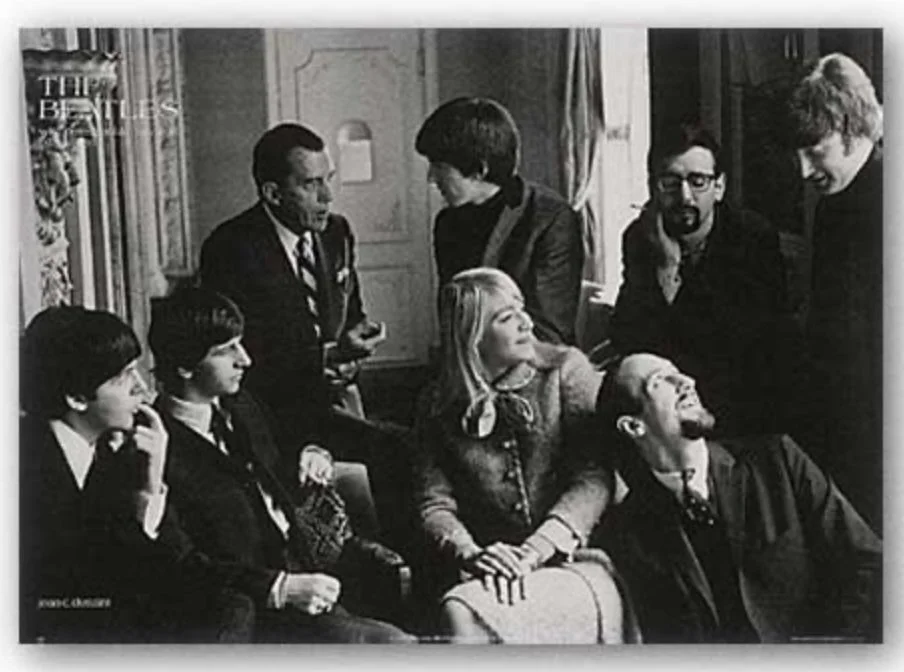
The Beatles; Peter, Paul & Mary; Ed Sullivan - by John C Desaint (1964)
Gwen and I sat in the front row of the folks gathered in Linda and Tim’s living room that night. A special and enduring memory of the occasion happened when you approached Gwen, sitting at the end of the row, and sang most of one verse of “Puff, the Magic Dragon” directly to her.
Peter, you have meant so much to so many. From the bottom of my heart, thank you for living the life you have. I’m glad our paths crossed.
Blessings…
- - - - -
Soundtrack Suggestion
Where have all the flowers gone?
Long time passing
Where have all the flowers gone?
Long time ago
Where have all the flowers gone?
Young girls have picked them, every one
Oh, when will they ever learn?
Oh, when will they ever learn?
(“Where Have All the Flowers Gone” – Pete Seeger)
Update on January 7, 2025:
Sadly, Peter died today. Here is the New York Times obituary.
In Memoriam
Martha Anne Dow
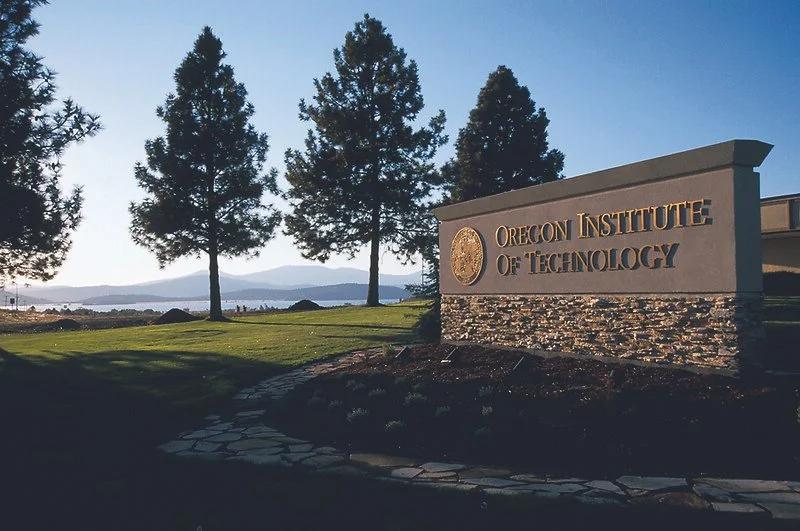
One of my best friends in the Oregon University System (OUS) has passed on. I knew Martha Anne Dow from the time I joined the OUS Chancellor’s Office staff in 1995. At that point she was the Provost and Vice President for Academic Affairs at the Oregon Institute of Technology (OIT) in Klamath Falls. When the incumbent president retired in 1998, Martha Anne was the natural and logical choice to take over the OIT reigns.
I was a huge fan and supporter of hers, as I found her to be one of the most decent individuals I had ever encountered in a higher education leadership role. Similarly, I knew her to be a true-blue fan and supporter of mine. I don’t have an actual count of how many times she was contacted during the last three and half years of my job-search process, but it was several. At one point a prospective employer disclosed, after doing reference-check phone calls on me, “whatever you do, don’t take Martha Anne off your reference list!”
Martha Anne, I’ll miss you. You left us way too soon.
PORTLAND, September 29, 2007 – Oregon University System chancellor, George Pernsteiner, announced with sadness this evening the passing of Dr. Martha Anne Dow, president of the Oregon Institute of Technology, who died today after a six-month battle with breast cancer. President of OIT since 1998, Dow is widely recognized for her leadership in advancing the mission of Oregon Tech and her passion for expanding access to higher education for Oregonians.
Governor Ted Kulongoski said, “Dr. Dow’s dedication to raising the aspirations of Oregon students to attend college reflected her unwavering belief in every person’s ability to grow, learn, and give back to their communities. She will remain for us always a heroine of educational advancement and a true Oregon treasure.”
Henry Lorenzen, president of the State Board of Higher Education, said, “Martha Anne was not only a highly talented and innovative educator, she was also an incredibly kind, thoughtful and genuine friend and colleague for all of us who had the honor of working with her. Our hearts are breaking for her family, friends, and for ourselves. Martha Anne has left an indelible mark on OIT, Klamath Falls, the state, and on the thousands of students she has taught, mentored and guided to a college degree in Oregon.”
Martha Anne Dow became the fifth president of OIT in May 1998, after serving there for six years as Provost and Vice President for Academic Affairs. Enrollment at Oregon Tech grew by almost 1,000 students during her tenure, and programs in engineering, computer science, applied health fields and geothermal power grew to meet regional and state needs. Dr. Dow worked tirelessly during the 2007 legislative session and previous sessions to gain new programs and support services for students, and to expand programs to meet current and anticipated workforce needs. Earlier this month, OIT’s new Center for Health Professions was named after Dr. Dow at the request of the major donors to the Center, Dick and Nancy Wendt.