Meditations on Time

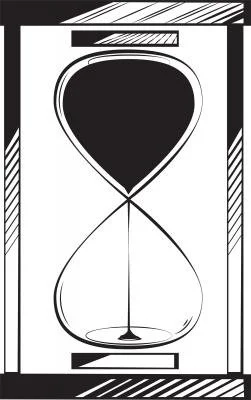
Here I am, at age 78, seemingly surrounded by stories about time. These stories naturally have a way of turning my thoughts toward how short my own time may be.

I just reread a novel in which every adult on the planet receives a box containing a string that reveals exactly how long they will live. And I’m recalling the television comedy about a moral accounting system that tracks a person’s life here on Earth. Finally, there’s the recent film that imagines we get to choose the precise form our eternity will take.

I did not set out to braid these snippets of our popular culture together. They braided themselves. At this age, time insists on being the subject.

The reminders are constant. Obituary columns, for one. My personal calendar, for another, which now includes far more medical appointments than it once did. Routine blood work. MRI, CT and DEXA scans. Follow-ups, with each visit carrying the distinct possibility that this will be the one where the doctor pauses too long before speaking. Most of the time the news is ordinary. “See you in six months.” But the suspense never quite disappears.

In Nikki Erlick’s 2022 novel The Measure, a mid-life character suggests that a string long enough to reach age eighty would count as good news. When I read that passage, I felt a small jolt. Eighty no longer feels like a distant horizon. It is a number that is uncomfortably close.

If I opened my box today, I would automatically have a long string. The real question would be: how much longer? A year? Five years? Ten? More? Though If I died today, surely no one would lament that I was gone before my time.

All of which leads to other concerns. How many more years would I want if they are shadowed by increasing pain — or other physical or mental decline? Longevity, at this stage, is not automatically the goal. There are conditions.

The Good Place, the four-season television series originally airing on NBC (and now available on Peacock), begins with a moral scoring system; every human action or interaction earns positive or negative points. An endless array of cosmic accountants supposedly keeps track of these tallies someplace up there in the sky, and when you die your final count decides your destiny. It is morality, and judgment day, rendered as a dispassionate spreadsheet.

At 78, that premise feels less like satire and more like a quiet audit. I find myself reviewing my own ledger. Have I been good? Not necessarily accomplished. Nor productive. But good?

My entries must be mixed. I have lived and loved imperfectly. I have hurt people I did not intend to hurt. There are relationships that did not endure. Some ended gently. Others did not. Even now there is sadness attached to those chapters, a sense that certain conversations might have gone differently if I had been wiser, braver or simply more skilled.

I sometimes wonder whether those endings count against me, or whether they merely show that I kept trying to connect and sometimes failed.

The show ultimately dismantles its point system, though. Life, it suggests, is far too entangled for simple math. Growth matters more than totals; it matters more than being flawless.

What lingers for me now is the series’ ending. Even paradise becomes hollow if it stretches on forever. In the final season, the characters are offered an exit. They step through one last door when they feel complete. Eternity with no ending, the show suggests, flattens meaning.

So, I wonder: How, ultimately, will I measure my existence? Will there ever be a time when will I feel complete?

Those questions followed me into the 2025 film Eternity, now on Apple TV, where humanity is invited to choose the form one’s forever will take. The idea sounds appealing at first. Pick your paradise. A tropical beach, for example. Perfect weather. Endless calm.

But what would that mean after a thousand years? Ten thousand? How could any single scene, no matter how beautiful, sustain significance without limit? Without scarcity?

Part of what makes a late-life conversation more vivid is precisely that it may not be repeated endlessly. Scarcity is what gives weight to life’s ordinary moments.

If I knew the precise length of my string, maybe I would live differently. I might rush to repair what remains frayed. Or I might grow cautious, conserving energy. Uncertainty leaves me in between. Aware of the limit, but not of its measure. Isn’t it that uncertainty that keeps life from becoming either frantic or complacent?

If there is a ledger somewhere, I hope it records effort. That it shows I kept revising myself. That I tried to mend what I could. That I did not stop growing simply because the horizon drew closer.

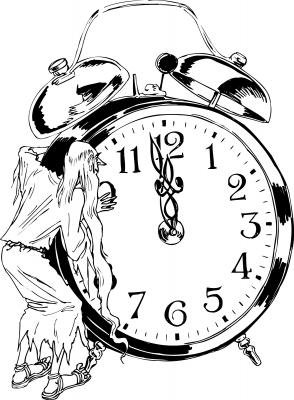
I am not eager to open the box. And I am not certain I want a tropical eternity with no horizon. I only know that the ticking is audible now. Doctor visits. Quiet evenings. Old relationships to ponder. Meditations on time.

Age 78. Still adding to the ledger.


Poetry Selection: The Summer Day

Who made the world?
Who made the swan, and the black bear?
Who made the grasshopper?
This grasshopper, I mean —
the one who has flung herself out of the grass,
the one who is eating sugar out of my hand,
who is moving her jaws back and forth instead of up and down —
who is gazing around with her enormous and complicated eyes.
Now she lifts her pale forearms and thoroughly washes her face.
Now she snaps her wings open, and floats away.
I don't know exactly what a prayer is.
I do know how to pay attention, how to fall down
into the grass, how to kneel down in the grass,
how to be idle and blessed, how to stroll through the fields,
which is what I have been doing all day.
Tell me, what else should I have done?
Doesn't everything die at last, and too soon?
Tell me, what is it you plan to do
with your one wild and precious life?

-Mary Oliver


Read More
Education, Leadership, Notices, Philosophy, Life Jim Arnold Education, Leadership, Notices, Philosophy, Life Jim Arnold

In Memoriam

Thomas A. Schwandt

Thomas A. Schwandt was a teacher in the most profound sense of that word. When he died right before Christmas, at age 77, the news felt to me like the quiet closing of a chapter that began more than thirty years ago.

I received my Ph.D. from Indiana University in 1995, with Tom as my dissertation director. I learned last November, just after his birthday, that he was ill. Even with that knowledge, the report of his passing landed heavily.

In absolutely no uncertain terms, Tom was the center of my IU graduate-student experience.

Tom began his academic life in English literature before moving toward theology, philosophy, and ultimately evaluation. That trajectory makes perfect sense in retrospect. His work was always animated by questions of meaning and moral judgment. My own undergraduate training was in chemistry, a discipline that demands intellectual discipline, analytic precision, respect for evidence, and humility before complexity. Tom helped me see that those habits of mind need not be abandoned when one enters qualitative inquiry; they must simply be redirected. Under his guidance, rigor became not merely technical exactness, but careful thinking about values, human judgment, and what our conclusions require of us.

His courses in interpretive inquiry and evaluation were, without reservation, the most formative of my time at Indiana. He did not merely perform scholarship; he practiced it carefully and deliberately. His classroom was marked by deep, open-ended questions that slowed thinking down: What does it mean to know? What is the validity of this knowledge claim? What are the ethical and moral responsibilities when working with human subjects? He made it clear that evaluation is not a technical exercise conducted from a position of detached neutrality. It is a value-laden and political practice. The task of the researcher or evaluator is not to eliminate values but to expose them, examine them, and reason together about them honestly.

When he agreed to direct my dissertation, I felt incredibly fortunate as well as challenged. Drafts were returned with precise criticism and unmistakable encouragement. He expected clarity because he assumed I was capable of it. That kind of steady confidence alters a scholar’s sense of himself, whether he is twenty-five or in midlife, as I was.

My career moved toward higher education administration rather than the scholarly life Tom exemplified. Yet his questions accompanied me into leadership roles. From policy development and implementation, to budget deliberations, to the never-ending personnel conflicts, I often heard echoes of his voice: What does this mean? Whose voices are present or absent? Given what we know, what should we do now? What is the right and responsible way to proceed?

When Tom retired in 2015, we exchanged old-school, handwritten notes. In mine, I told him that, with four degrees earned across four different decades, I had experienced dozens, perhaps hundreds, of classroom leaders. Students remember their great teachers, try to forget the terrible ones, and grow hazy about most of the rest. “You,” I wrote, “were in a category by yourself. You were not only among the greats, you were simply the best. In the world of academia, I tell people I got to work with a rock star while doing my doctoral work at IU.”

His reply captured his character perfectly: “… it may make you feel good to know that I doubt I have ever failed to mention your Ph.D. thesis in every qualitative methodology class I have taught! … I have always felt that the real rock stars were the students that I had the great fortune to work with.”

That generosity, that instinct to redirect praise, was quintessential Tom. He saw teaching not as performance but as stewardship.

When I read his obituary, and later the tribute from the European Evaluation Society, with their descriptions of wisdom, integrity, faith, and service, I recognized immediately the same man I had known in front of classrooms decades ago.

Now, in retirement, as I concentrate on reading, writing, and reflection, I recognize how much of my intellectual architecture in later life was formed under his guidance. If there is any seriousness to my thinking, any respect for complexity and moral responsibility, it surely can be traced back to his mentorship.

In 1995, I acknowledged and thanked him as an incredible gentleman and scholar. Thirty some years later, I understand those words even more fully.

I remain deeply grateful that I had the privilege to be his student and colleague.

His questions remain with me. Still.


Soundtrack Suggestion

Across the morning sky,
All the bird are leaving,
Ah, how can they know it’s time for them to go?
Before the winter fire,
We’ll still be dreaming.
I do not count the time

Who knows where the time goes?

(“Who Knows Where the Time Goes” – Sandy Denny)


Read More
Life, Love, Philosophy TechnoMonk Life, Love, Philosophy TechnoMonk

What Is It All About?

I am now in my 77th year and quite frequently, in this mostly-retired life I’m living, I wonder how to make the most meaning of my remaining days. I say “mostly retired” because back in 2019, after five years with no earned income, I decided to seek part-time work that would supplement my various and sundry (i.e., relatively-modest) retirement-income streams. So, in the last five years, and because I have a wide range of skills, I have worked three successive, different jobs on our local community college campus. It has been a valuable experience, so far, and keeps both my mind and body active. 

Retirement, though, is nothing like I imagined – that is, if I thought about it much  at all. I never really did have a coherent “retirement strategy,” as we are encouraged to do. Rather, my approach seemed to be: to work as long as I can and then see where I was in “old age.” You would be right in concluding that this is not really the most prudent game plan. And, as it turned out, I spent a considerable portion of my life pursuing multiple academic degrees, which significantly cut into my ability to put away any kind of really-comfortable, old-age nest egg. (Student loans played a big part in that, I have to admit; I was paying them off until age 66. It seems I missed the whole “forgiveness” scenario by about three decades.)

The bottom line here is: I have found this time of life to be quite problematic. Despite the fact that I am working part time, getting up in the morning and finding purpose has been a real issue. Questions such as: what am I doing with my life? and what have I done with my life” keep seeping into my consciousness. I keep wondering about the value I have added to the universe during my younger years, and I am especially questioning the value of my life now. As always, I am asking: what’s it all about?

Most people would say: love. But it seems that has mostly passed me by this time around.

Soundtrack Suggestion

What’s it all about Alfie
Is it just for the moment we live
I believe in love, Alfie
Without true love we just exist, Alfie
Until you find the love you’ve missed
You’re nothing, Alfie

(“Alfie” – Burt Bacharach)

Read More

The Only Winning Move

“A strange game. The only winning move is not to play.” [The WOPR computer at the conclusion of “War Games” (1983).]

“War Games” is a 1983 movie starring Matthew Broderick, Ally Sheedy, John Wood and Dabney Coleman. I fell in love with this film the first time I saw it, at the State Theater in downtown Corvallis, during the first week of its release. A friend of mine had dropped by my apartment and said, “let’s go see ‘War Games’.” I hadn’t heard of it, but I said, “sure, ok.” (1983 is a couple of years before I first touched the keyboard and mouse of an Apple Macintosh, but I was, perhaps, influenced by this film, in the direction of my now long-time interest in computers.)

This is the story of a high school student, David Lightman (a stunningly-young Matthew Broderick, pre-Ferris-Bueller), an intelligent, but somewhat-naïve, underachiever with an interest in computers and computer games. He gets caught up in a dramatic, but mostly-unrealistic, scenario whereby he almost causes the end of the world by initiating WW III. The primary setting is Seattle, WA.

I watched this movie again this week (now available on Max) for maybe the tenth or fifteenth time. I think it’s totally fascinating to see the world portrayed as it existed in the Cold War era, before September 11th, and prior to the technology that we all now take for granted. How did we even exist in the pre-internet era of floppy discs and dime-eating pay phones!?

In search of the latest computer game by an outfit called ProtoVision, David searches for all the phone-modem-equipped computers in Sunnyvale, CA, and stumbles upon a Defense-Department machine called the WOPR (“War Operation Plan Response” – it’s pronounced like the Burger King sandwich, “whopper”). He ultimately finds a way into this machine via a back-door password left there by the original designer. The WOPR believes, therefore, that David is “Professor Falken,” its creator. Now posing as the Professor, he finds the game programs on this machine and elects to play, not chess, not poker, but rather something called “Global Thermonuclear War.” David chooses the side of the USSR in the conflict and initiates a nuclear strike on the US.

The machine interprets the entire activity, as “real” and, logically, takes steps to protect the US from the perceived attack. In the tense conclusion, during which time the WOPR seeks to find all the codes it needs to launch its nuclear-warhead-equipped missiles, David comes to the rescue at NORAD headquarters by requesting that WOPR play itself in an infinite number of tic-tac-toe games. Spoiler alert: World War III is averted when the WOPR “learns” that not only is that game nonsense, but any potential scenario leading to WW III is similarly fruitless: there’s simply no winner when, as it turns out, all outcomes lead to global annihilation. 

As the film ends, the WOPR announces (in a semi-Hal-like voice) its assessment of “Global Thermonuclear War,” (to the relief of all at NORAD command): “A strange game. The only winning move is not to play.” 

Interestingly, this is the same thought I had recently when a once-close personal relationship wound its way to a tortuous, scorched-earth conclusion. Ugh.

Soundtrack Suggestion

Don’t you understand what I’m trying to say
Can’t you feel the fears I’m feeling today?
If the button is pushed, there’s no runnin’ away
There’ll be no one to save with the world in a grave
Take a look around you boy, it’s bound to scare you, boy

And you tell me
Over and over and over again, my friend
How you don’t believe
We’re on the eve of destruction

(“Eve of Destruction” – Barry McGuire)

Read More

Generosity and Free Will

“I was trying to figure out what I should have already told you, but I never have. Something important, something every father should impart to his daughter. I finally got it: generosity. Be generous, with your time, with your love, with your life.” [From a terminally-ill, near death, Dr. Mark Greene, to daughter Rachel, during “On the Beach,” an episode of “ER,” May 9, 2002; emphasis mine.] 

I wrote last time about my fall on the ice during the recent storm. As reported, I did not break any bones; however, the residual effects of the mishap continue to linger on. The trauma of the tumble seems to have taken up residence in my lower and upper back – as well as in my psyche. My spirits are quite low.

In the first two weeks after the storm, I had massage, physical-therapy, and Zero-balancing sessions – in addition to my regularly-scheduled therapy appointment. At this point, though, my recovery still has a way to go. I need significantly more time – andhelp- to facilitate my healing.

In questioning my life’s choices during this period of blueness, I reviewed an essay from February 2006 here on Musings entitled “Generosity.” I have had reason to reflect again on the meaning of this term and specifically its place in the context of friendship.

What am I talking about? Well, I now have reason to believe that what I had experienced as acts of generosity from a friend were, perhaps, deeds that had been misinterpreted by me. I now suspect that perhaps some kind of relational score-keeping had been in play. This has sent me even more into an emotional tailspin, leading me into a deeper examination of my own behavior; to wit: Who am I as a friend? Am I in search of some kind of reciprocity rather than act from a generous spirit? Am I generous enough with my love? My time? My energy? My life? Who am I, really? And, in this context, how am I perceived by others?

I have always believed that each of our lives are comprised of our own individual choices – a sum of the good and/or bad. This long-held belief has, recently, however, come to be challenged. During the last few weeks I have been trying to make my way through Determined by Robert Sapolsky, a dense academic treatise on the topic of free will. Sapolsky makes the compelling argument that, essentially, free will is a myth -- that our livesare really the sum of our biology, our environment, our experiences, of human evolution. The theory is that whatever we choose to do in any moment is dictated by the sum of our life up until the previous moment, that that moment is the result of the previous moment, on and on and on. From Sapolsky’s viewpoint “…all we are is the history of our biology, over which we have no control, and of its interaction with environments, over which we also have no control, creating who we are in the moment” (Sapolsky, 2023, p. 85).

So, in this particular paradigm of human existence, none of us can really be held accountable for our actions – they have all been pre-determined. In fact, every act of mine (ours), lets say in the matters of charity or generosity, are built into us and that we don’t really choose to behave in one way or the other.

I admit that I find myself being quite depressed at the concept that my (and your) existence has already been determined in advance, that my (our) choices are not really choices. Thinking about this interpretation of being human has not done anything positive for my spirits.

So, in sum, right now my body and my soul are in pain. I am seeking help from various sources to manage life right now. But I am in a state of confusion about the meaning of the human experience and what actions I (we) may (or may not) have control over. I am wondering what “choice” is --and whether or not I have the ability to actually choose the right way to work my way out of this painful period.

Reference
Sapolsky, R. (2023). Determined. New York: Penguin Press.

Read More