
Really: Who Are You?
Introduction
I have a new friend who lives far, far away. She is so distant, in fact, that it’s entirely possible we may never meet in person. She knows me through Twitter, this blog, frequent emails, and the occasional IM session. She has a lot of information about me available to her, of course, as I’ve laid out the good, bad, and ugly details of my life on the internet for three and a half years now. Reportedly, she’s read a lot of this material; and I know she reads my long and intimate emails as carefully as I read hers.

I feel as if I’ve recently been significantly challenged by her, though. It’s as if she’s digested everything about me, including the two “This I Believe” essays (“On Being Present” and “Listening and Leadership”) and is saying to me, “yeah, yeah, yeah, Jim ... I know that’s what you believe.” And that she’s read the other stories, rants & raves – ridden the emotional waves – and is still waiting on me for more: “yeah, yeah, yeah, Jim ... I know that’s what’s happened to you.”
And, now, she’s asking me, “tell me more, Jim ... what do you really believe? Who are you, really?”
And, so, this essay is the result of the attempt to organize a few thoughts along those lines. I’m not sure that what you’ll find here are actually answers, though ... you’ll have to decide that for yourself. For even after you read this, in all probability you’ll still be left wondering ...
By providing this analysis of “who I am,” of course, I’m anticipating that the portrait I paint is consistent with the information you’ve already seen ... and, in fact, that an inductive analysis of the mass of qualitative data provided in these pages would lead to the broad themes I outline below. Please! ... do not think, however, that this is a “scientific approach” to talking about my life’s mission; it decidedly is not. In fact, what I’m doing here is reaching down into the bowels of my being and attempting to convey some ideas about what I believe about life, and how I go about living this life.
I’ve had a little bit of practice writing in this area. When I began studies for my counseling master’s degree, one of the essays I was required to produce was entitled “The Nature of People.” This was an assignment that required all of the newbie aspiring counselors to outline, as explicitly as we could, how we believed people “worked” (i.e., if you’re going to help people with their problems, you must have some underlying philosophy about their basic “nature”). I toiled and toiled away on my assignment for a few weeks, then had one of the doctoral students critique my draft.
“Well, Jim, this looks like a good start,” he said. (As, head down, I returned to the typewriter.)
So, perhaps, what I’ve outlined for you here is merely another good start. Let’s see, shall we? Of course, I’m aware of the risks of self-disclosure on this level: you may end up thinking that my entire belief system is wholly superficial, no more profound than “All I Really Need to Know I Learned in Kindergarten.” (I confess: I offer no new ideas here.) Even more on point, though, might be the observation that everything I have ever needed to know about living, life, and the spiritual path, just might have been gleaned from an old bootlegged Ram Dass audiotape (“The Seasons of Our Lives,” from the late 1970s) – a recording that I’ve listened to over and over again throughout the years. [Much of that material is also to be found in Dass’ book Grist for the Mill (Unity Press, 1977).] Then, you’ll discover below that I’ve pulled some quotes from Angles Arrien’s Four-Fold Way: a worldview that has been influential in my thinking about what a life’s work entails.
Therefore: here I go with some ideas about “who I am” by examining “why am I here?” For the purposes of this essay, I’m going to treat the questions as equivalent; that is, by examining why I am here, I’m suggesting that this is who I am. I’ll let the philosopher in you, the reader, argue (or not) with that premise. It will be obvious that I’m not speaking from any “religious” orientation ... in fact, this a highly eclectic spiritual (and/or philosophical) model I espouse. And, of course, since this is an essay for a blog, the points I outline here are mostly short and to the point. (Who likes book-length blog entries, anyway?!)
Why Am I Here?
I believe that we humans are spiritual beings who take form on this earth for a purpose: that we are incarnated and take on bodies to “do our work.” And that everyone’s work is different. I am certain of my purpose, and simply put:
I am here to learn and grow.

Of course, you may ask, isn’t everyone on earth here to learn and grow? In my opinion, it’s just a matter of where those items fall among life’s priorities from person to person. For me, the emphasis on “learning and growing” should be readily apparent, for if you know anything about me, you realize that I’ve been in school a lot of my life and collected four college degrees along the way. You might say I have an obsession, or lust, for learning, in all its forms: from classrooms, books, life experiences, career changes, relationships, emotional risk-taking, physical pain, and heartbreak & depression (to name a few) ... I take my learning wherever I can find it. My learning is not only for the purpose of intellectual development, but for the other dimensions of my life as well: growth in the domains of the physical, emotional and spiritual.
Now, to be slightly more specific, I briefly outline below some of the areas of learning that I think about all the time, and tend to be near the top of my consciousness-level as I go about my daily routines.
I am here to learn how to be present, open my heart, and offer my love.
I have written here previously about my belief in the importance of “being present.” It is a primary mission for me to live in the present: to be aware of myself and my surroundings, and, at all times, strive to know what I am thinking and feeling. Concurrently, it is my goal to tune in and be there for others on the most basic of levels: one soul to another. I open my heart, accept others as they are, and aim to love them unconditionally.
Ram Dass implores us thusly: “I say to you very simply, and very directly, what happens to another human being in your presence is a function of who you are, not what you know. And who you are is everything that you’ve every done and all the evolution that has occurred thus far. Your being is right on the line every time you meet another human being. And what they get from you through all the words of love or kindness or giving is very simply a function of your own level of evolution ... What we do for each other is we create a space ... that allows each other to do what we need to do ... we each have our own work to do in this incarnation.”
My beliefs and Dass’ words appear to be consistent with Angeles Arrien’s Way of the Warrior or Leader. This is described as “showing up, or choosing to be present. Being present allows ... access to the human resources of power, presence, and communication ... the way of the Leader [is expressed] through appropriate action, good timing, and clear communication.”
I am here to learn to live honestly, openly, authentically, and with integrity. I am here to learn how to lead, and more importantly, to provide a model for moral leadership.
I am not here to keep secrets about who I am. I am here to be open and let the world in: to tell you what’s going on with me, honestly, and in the moment. It is critical for me to live consistently within the framework of my dearly-held and inner-most beliefs and values (which is what I am trying to express here). I do not compromise my principles for the sake of expediency or personal gain. When I’m in a leadership role, which is my typical situation, it’s with a high sense of moral responsibility and obligation: to provide the most evolved model of leadership of which I am capable.
Arrien’s Way of the Visionary or Creative Problem Solver suggests that we aim “to tell the truth without blame or judgment. Truthfulness, authenticity, and integrity are keys to developing ... vision and intuition ... expressing the way of the Visionary through personal creativity, goals, plans, and the ability to bring life dreams and visions into the world.”
I am here to learn how to heal myself and others. I am here to learn how to be the best possible version of myself.
I have lived a huge portion of this lifetime learning and living with an inadequate model for giving and receiving love. And I’ve learned other dysfunctional ways of being that have led to profound experiences of physical and psychic pain. It’s my mission in this lifetime to learn about these unhealthy paths, to overcome them, and learn about living “right” and “healthy.” I believe it to be my obligation to teach others about my struggles and the “solutions” I’ve discovered. I know that when I am living in pain, I am not displaying the best possible version of myself. I am here to learn how to live with a minimum of pain and to share that person, my best possible self, with the universe.
Ram Dass reminds us: “And the injunction given to the physician ‘heal thyself,’ is right at the mark because we are here to talk about our own work on ourselves, because that is our gift to each other and it’s also what we’re doing here on earth in the first place.”
Arrien’sWay of the Healer or Caretaker is to “pay attention to what has heart and meaning. Paying attention opens ... to the human resources of love, gratitude, acknowledgment, and validation ... [and] the way of the Healer is expressed through ... attitudes and actions that maintain personal health and support the welfare of our environment.”
I am here to learn how to let go.
I have had a tendency toward over-control in my life: believing and acting as if I could actually change another person, determine the outcome of a situation, and/or just generally “be in charge.” I am still learning, often painfully, to accept that there is really nothing I am able to control: not another person, not their perception of or feelings about me, not any situation, nor life crisis. Nothing. Learning to invest myself completely in another person or in a situation, and then letting go of outcome, is one of the most significant of my life’s lessons; it’s perhaps the one I’ve struggled with the most. My tendency toward perfectionism, and my desire for “justice” and “rightness,” have led me down a path where it’s been difficult for me to let go of outcome. I am here to learn to be not perfect, and to let go.
Ram Dass advises: “The implication of “perfect,” if you want to deal with the concept of God ... if I say ... ‘God, what are you doing, why are you screwing up?’ ... I, who have this little teeny limited vision, mainly controlled by my rational mind, which is a little subsystem of a little subsystem, it isn’t even a very interesting way of knowing the universe, I sit there like this little ant on an elephant and say to him ‘you really blew it that time.’ I say ‘you really blew it that time’ – you know where I say that from? – I’m saying it from my own fear of death ... If I’m attached to you being other than the way you are now, I’m saying to God, ‘if I had made him, I would have made him different than he is now,’ and I [then I hear] my guru saying ‘don’t you see that it’s all perfect?’”
And Angeles describes that the Way of the Teacher or Counselor is to “be open to outcome, not attached to outcome. Openness and non-attachment help ... recover the human resources of wisdom and objectivity. The way of the Teacher is expressed through ... constructive communication ....”
Summary & Conclusion
So, to summarize, I know that I am here to learn to: be present, open my heart, live authentically, model integrity and moral leadership, heal myself, let go, and to love. It’s my way of approaching the universe, a lifetime’s worth of busy-ness. These are the lessons I have to learn, the tasks I need to perform. It’s the “who I am.”
But is this all that I am? All that I do, all that I have to learn? Well, no, but it’s what comes to mind right now. (And it’s a start.) I’m tempted to add some additional thoughts about how the Four Noble Truths of Buddhism play into my philosophy of life, and their relationship to the learning areas described above ... but this monologue has gone on long enough. And I have touched on the Four Noble Truths in at least one previous discussion (see “Freedom and Release,” for example, from January, 2006).
In conclusion, I am compelled to observe that I feel extremely unfinished as a human. There’s so much to learn, so little time. For, as Jimmy Buffett suggests “... still twenty four hours maybe sixty good years, it’s not that long a stay.”
Soundtrack Suggestion
Well, who are you? (Who are you? Who, who, who, who?)
I really wanna know (Who are you? Who, who, who, who?)
Tell me, who are you? (Who are you? Who, who, who, who?)
’Cause I really wanna know (Who are you? Who, who, who, who?)
(“Who Are You” – The Who)
Times Are A-Changin’
It seems strange to admit at this point, but, with regard to my enthusiasm for the candidacy of Barak Obama in the 2008 presidential race, I was actually a “late comer.” It was in February 2007 that I first made some observations here about the Democratic candidate field, praising John Edwards for both his honesty and his astute policy messages (after an appearance on Real Time with Bill Maher). And, right up until the time he dropped out of the race, during the California primary in February of this year, Edwards was my guy.
I happen to have mailed in my California primary ballot the same day Edwards abruptly withdrew. So, that’s how I spent that particular vote. After that happened, I had to go shopping for another Democrat to support...but the decision, for me, was a no-brainer. Who was really left at that time that had any viability? Well, Hillary and Barak. And Hillary wasn’t really an option. She just wasn’t. Plus, I had been watching Obama during the entire campaign; he had been impressing me more and more, with everything he said (in that endless stream of early debates) and in every primary victory.
What did I see in Barak Obama, the guy with the funny name? Well, a true leader. Someone, like Edwards, I believed I could trust. Someone with whom I shared the same basic realities about, and aspirations for, the nation. Someone who could bring about real, and desperately needed, change.
I just knew he was going to be our next president. And I felt great about that. What a difference he could make for us! What a healthy, delightful and delicious contrast he would be to “W”!
From the time of the California primary to the late-summer conventions, I became more and more of a political junkie and an Obama enthusiast. In addition to the “fake news” updates I got every night on The Daily Show with Jon Stewart, I began watching a lot of MSNBC’s coverage of the campaign. Keith Olbermann became a favorite. And, then, they gave Rachel Maddow her own hour adjoining Olbermann. Wow, two hours a night on MSNBC and a half hour on Comedy Central. I couldn’t get enough!
I watched all four nights of both nominating conventions. Not exactly the high drama those events used to be, but I was thrilled with Obama’s pick of Joe Biden and the massively-attended acceptance speech outdoors in Denver. And I was appalled at things like Rudy Giuliani’s rambling, inflammatory speech and McCain’s selection of Sarah Palin. (A “laugh-out-loud choice,” commented Rachel Maddow immediately.)
Then, there was the remainder of the campaign: several weeks of surprise after surprise, including an economy that was increasingly going down the toilet and one sadly-idiotic remark after another from Palin. I watched the four debates, and “hacked” my way through all of them. I sent out many, many tweets, in real time, during those events and even had one appear on national television on the Current Network.
Finally, finally, came election day. And night. I had voted by mail two weeks earlier, so no line-standing for me. Alas, I had to be on campus that night to work, but was able to follow a lot of the early coverage on MSNBC, live, online, in my office. The early returns had me wondering. Kentucky went to McCain right off. Well, no surprise: except I had a difficult time imagining anyone voting for McCain/Palin!
In the end, of course, everything turned out just fine. Obama was declared the projected victor while I was in a classroom, away from the coverage. But I made it home in time to see McCain’s concession speech. And, finally, saw in him a candidate I could respect.
The scene in Grant Park was amazing, as was Obama’s victory speech. We’re going to be having a different kind of national identity from now on, I’m guessing. And it’s about time! Our eight-year nightmare with Bush is about over. America. Has. Awakened. (!)
Soundtrack Suggestion
Come senators, congressmen
Please heed the call
Don’t stand in the doorway
Don’t block up the hall
For he that gets hurt
Will be he who has stalled
There’s a battle outside
And it is ragin’.
It’ll soon shake your windows
And rattle your walls
For the times they are a-changin’.(“The Times They Are A-Changin’” – Bob Dylan)
The Monster Bash
With the results of the Wyoming caucuses now in, the difference today between Obama and Clinton is reported to be 142 delegates. The best guess is that neither candidate will garner enough in the remaining contests to go into this summer’s convention with the nomination assured.
So Hillary has recently tended to go maniacally negative. And – I hope you agree with me – Barack is looking more and more “presidential” all the time.
You had probably long-ago guessed that my candidate was John Edwards. Yes, I voted for him here in the California primary, even though by that time he had decided to call it quits. Edwards was the one that I was most drawn to: I want someone in the White House whom I can trust.
I’ll vote Democratic in November. That’s a given. And I so dearly want a candidate to vote for.
Obama is now that person. Regardless of where he stands on the issues, I see a person who is intelligent, articulate, level-headed, and honest-to-god leadership material. In Barack, I believe we have someone who has the potential to actually unite this country.
Obama is against the war. He’ll get us out – somehow. I really don’t care about the fine-print differences in the proposed healthcare plans. I trust that he’ll gather other smart people around him and lead us out of this recession.
And that he’ll inspire a sense of pride in being an American, for a change.
Should Hillary win the nomination, come November I’ll hold my nose and vote (not for her, but) against McCain. I submit that Obama’s recently-departed foreign-policy advisor Samantha Power was correct when she labeled Hillary a “monster.” Too bad she (Power) had to lose her job over such an obvious (though “negative”) truth.
It’s Hillary who is not presidential material. She is not a person to trust. It’s Hillary to watch your back for.
I choose Obama.
Soundtrack Suggestion
I’m a young soul in this very strange world hoping I could learn a bit about what is true and fake.
But why all this hate?
Try to communicate.
Finding trust and love is not always easy to make.
(“New Soul” -- Yael Naim)
In Memoriam
Martha Anne Dow
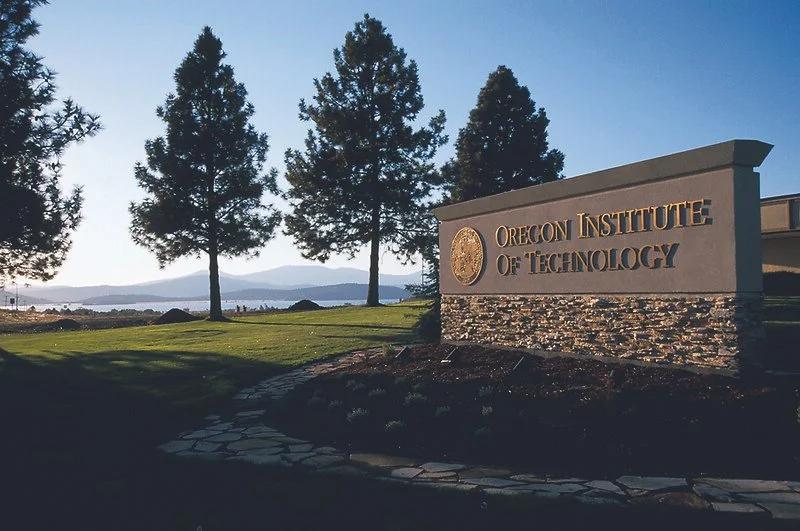
One of my best friends in the Oregon University System (OUS) has passed on. I knew Martha Anne Dow from the time I joined the OUS Chancellor’s Office staff in 1995. At that point she was the Provost and Vice President for Academic Affairs at the Oregon Institute of Technology (OIT) in Klamath Falls. When the incumbent president retired in 1998, Martha Anne was the natural and logical choice to take over the OIT reigns.
I was a huge fan and supporter of hers, as I found her to be one of the most decent individuals I had ever encountered in a higher education leadership role. Similarly, I knew her to be a true-blue fan and supporter of mine. I don’t have an actual count of how many times she was contacted during the last three and half years of my job-search process, but it was several. At one point a prospective employer disclosed, after doing reference-check phone calls on me, “whatever you do, don’t take Martha Anne off your reference list!”
Martha Anne, I’ll miss you. You left us way too soon.
PORTLAND, September 29, 2007 – Oregon University System chancellor, George Pernsteiner, announced with sadness this evening the passing of Dr. Martha Anne Dow, president of the Oregon Institute of Technology, who died today after a six-month battle with breast cancer. President of OIT since 1998, Dow is widely recognized for her leadership in advancing the mission of Oregon Tech and her passion for expanding access to higher education for Oregonians.
Governor Ted Kulongoski said, “Dr. Dow’s dedication to raising the aspirations of Oregon students to attend college reflected her unwavering belief in every person’s ability to grow, learn, and give back to their communities. She will remain for us always a heroine of educational advancement and a true Oregon treasure.”
Henry Lorenzen, president of the State Board of Higher Education, said, “Martha Anne was not only a highly talented and innovative educator, she was also an incredibly kind, thoughtful and genuine friend and colleague for all of us who had the honor of working with her. Our hearts are breaking for her family, friends, and for ourselves. Martha Anne has left an indelible mark on OIT, Klamath Falls, the state, and on the thousands of students she has taught, mentored and guided to a college degree in Oregon.”
Martha Anne Dow became the fifth president of OIT in May 1998, after serving there for six years as Provost and Vice President for Academic Affairs. Enrollment at Oregon Tech grew by almost 1,000 students during her tenure, and programs in engineering, computer science, applied health fields and geothermal power grew to meet regional and state needs. Dr. Dow worked tirelessly during the 2007 legislative session and previous sessions to gain new programs and support services for students, and to expand programs to meet current and anticipated workforce needs. Earlier this month, OIT’s new Center for Health Professions was named after Dr. Dow at the request of the major donors to the Center, Dick and Nancy Wendt.