
The Weight of Books
I am in the process of getting rid of my book collection, and the experience has brought on a more profound sense of loss than I expected. I am not simply disposing of things I no longer need. As I remove the books from my shelves, I sometimes feel that I am losing pieces of myself.
Not long ago, I wrote about how my world is shrinking: fewer places to go, fewer things to do, fewer miles I can walk. I am even physically shorter. Now I am pondering another kind of shrinking as I continue to reduce the number of possessions I own.
I live in a 1,000-square-foot, two-bedroom upstairs apartment in Eugene, and everything I have, except my car, fits inside it. That was not true when I lived down in Marin County before I retired. In addition to all the things in my apartment, I rented a storage room for stuff I no longer used but was reluctant to discard. One summer, perhaps around 2011, I decided to empty it and lighten my load. I did not finish the project that summer, but I continued working on it during weekends and time off. By the summer of 2014, after many, many trips to Goodwill, the recycling center, and the dump, the storage room was empty. It was then that I moved back to Eugene, bringing only what would fit into my current apartment.
As I approach my eightieth year, I have come to truly appreciate the wisdom of this undertaking. I now practice downsizing as a lifestyle not a project; I try to dispose of one old item for every new one I bring home. This has worked reasonably well, except when it comes to books. I have been a reader and collector for most of my life, although I do not acquire rare books or valuable first editions. Whenever I wanted to read a book, or was just interested in one, I simply bought it. Eventually, it joined the steadily growing number in my bookcases.
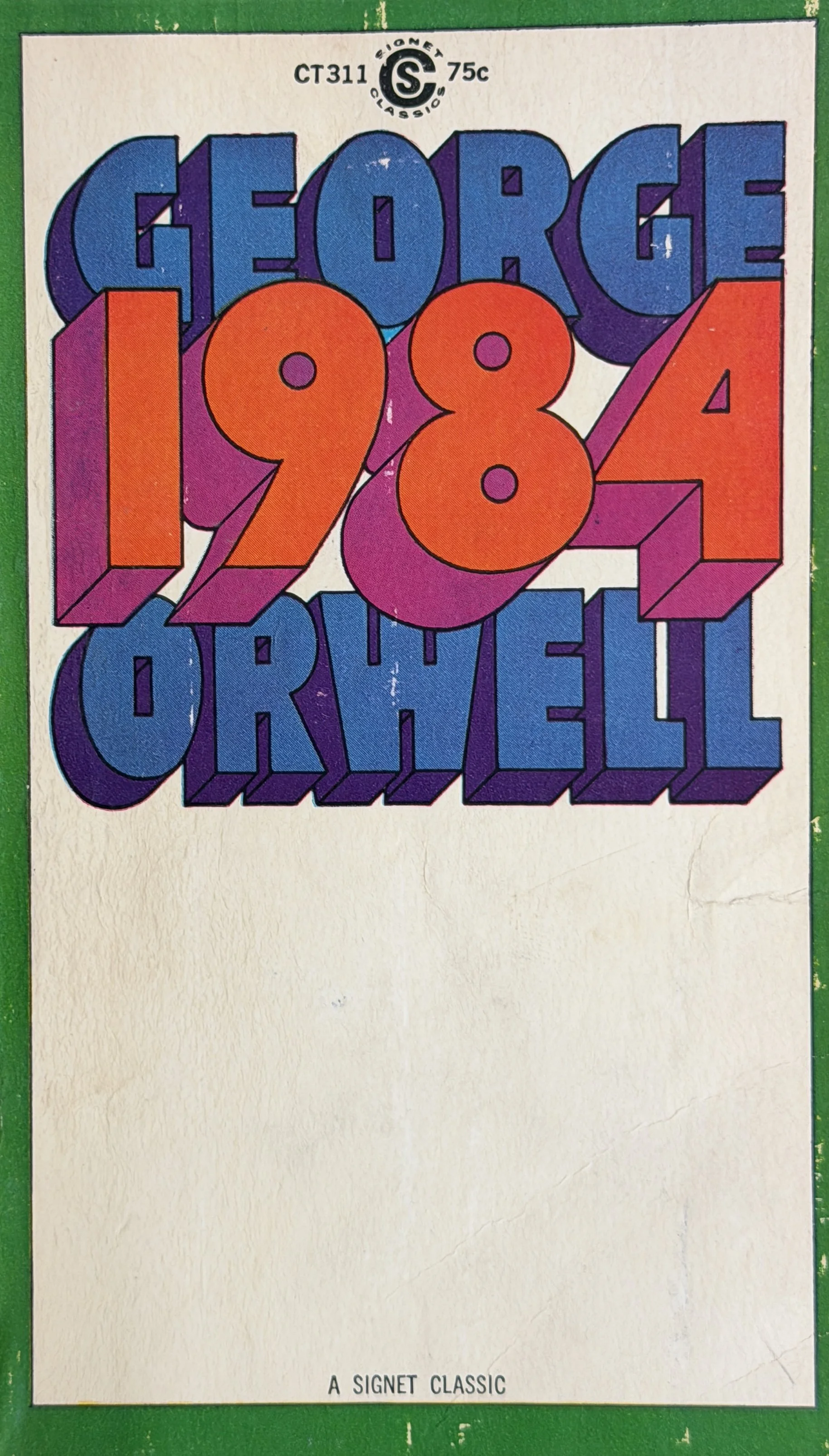
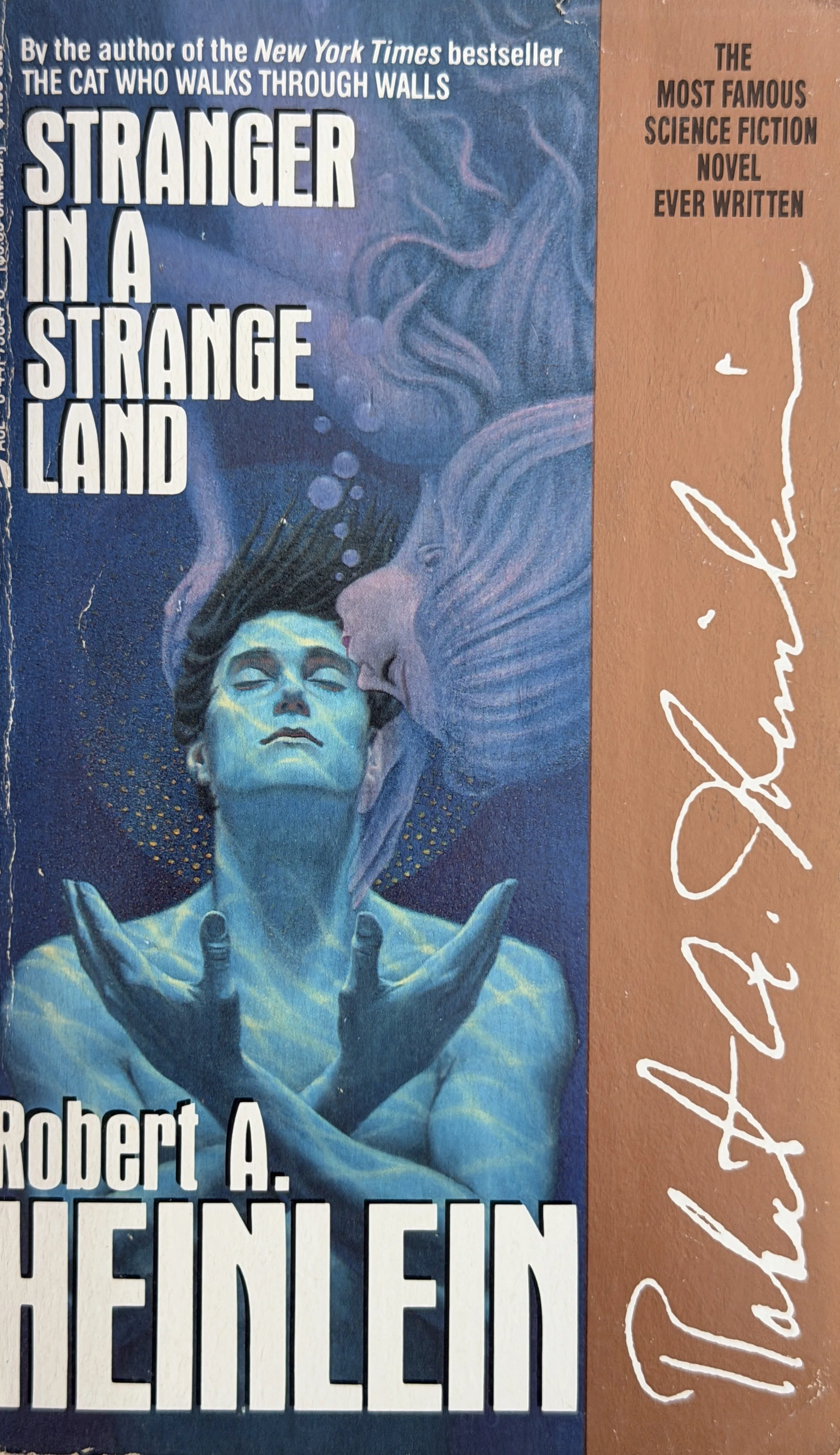
As a preteen and teenager, I read a great deal of science fiction. I spent summer days reading indoors while my mother implored me to go outside and play. Most of those early books have disappeared, but I still own a few paperbacks from high school, including the copy of George Orwell’s 1984 that was assigned reading.
As just mentioned, not all my former collections have survived. During my early days in graduate school, I owned what amounted to a rather ambitious chemistry library, but those books also disappeared gradually over many moves. Giving them up was an earlier version of what I am doing now, although I do not remember experiencing quite the same sense of loss.
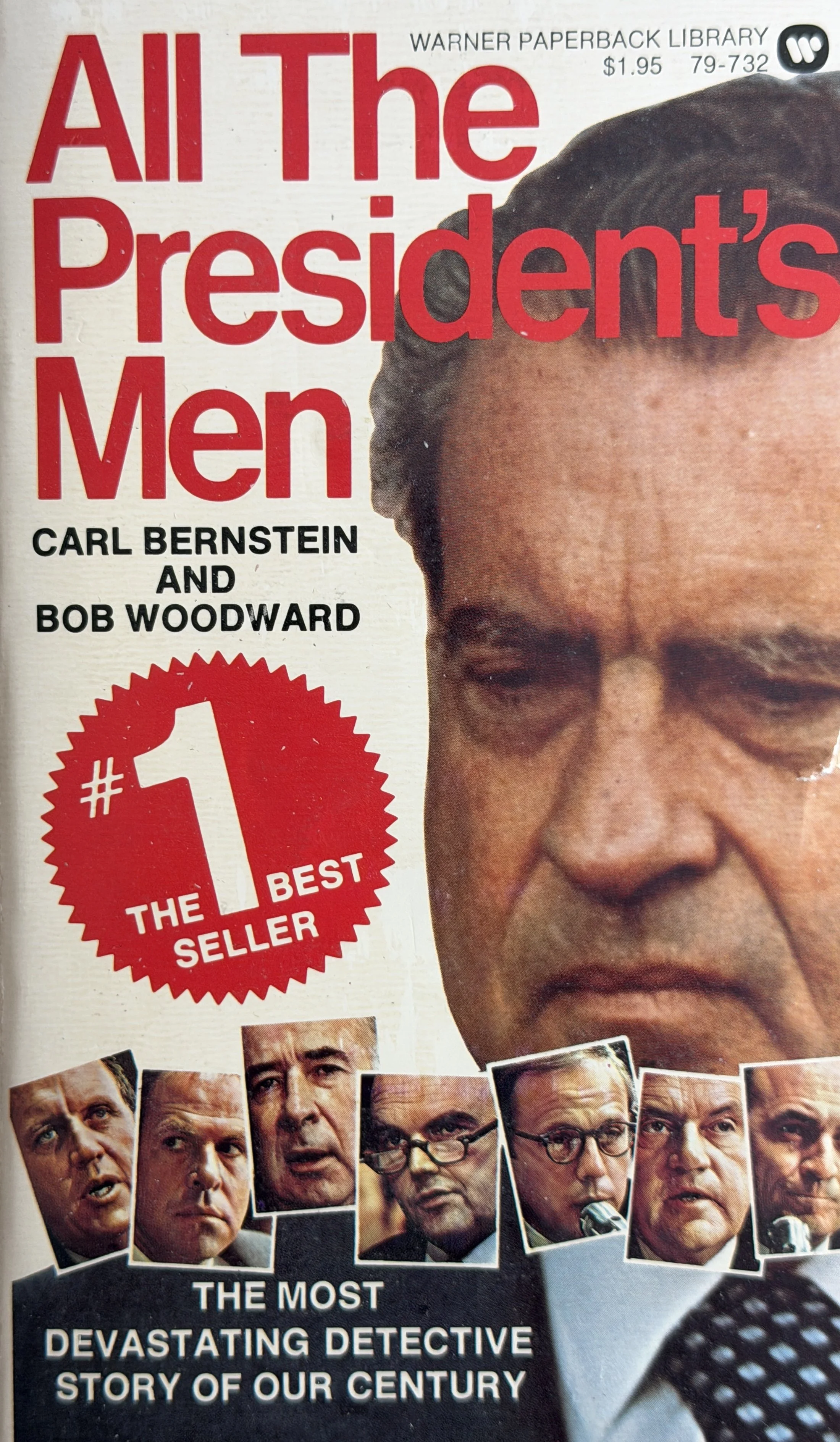
The books that remained reflect the changing interests and circumstances of my life. They included contemporary novels and biographies; and more books about photography, counseling, psychology, self-help, spirituality, travel, and health; and a collection about Watergate that began with All the President’s Men. My later doctoral work added books on higher education, qualitative research, American Studies, organizational culture, the history and philosophy of science, and epistemology.
Most of the physical weight I have lugged from city to city has been books. I have packed them, hauled them up and down stairs, and transported them from one home to another. For years, I accepted this as a routine part of life. Now I am considering a move into a senior residential community, where I will likely live in a one-bedroom or studio apartment. I cannot take all these books with me, and storing them makes little sense. The practical conclusion is clear, but carrying it out has been painful. I now buy books on Kindle, allowing me to continue reading without refilling the shelves I am trying to empty.
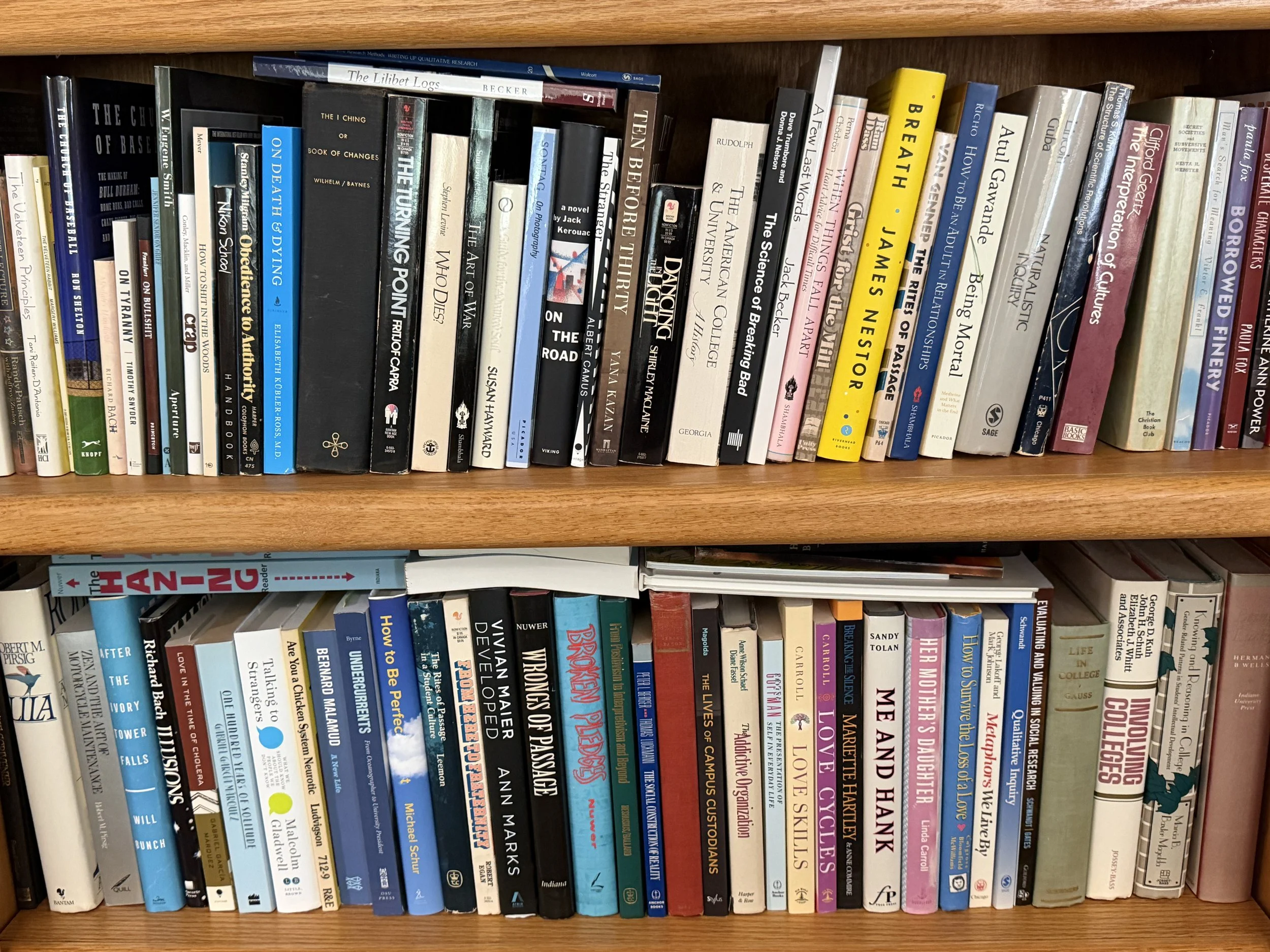
During the past few months, I have disposed of perhaps 300 to 400 books, still less than half my collection. I have sold roughly equal numbers to a local used bookstore and a buyer in Illinois. When I visit the bookstore, I take three banker’s boxes, each containing ten to twelve books. One box is about as much as I can safely carry down my stairs, so I take them down and lift them into and out of my car one at a time. I often have to bring some books back home.
The Illinois buyer has an app that lets me scan the barcodes on newer books and learn immediately whether it will accept them. Many older paperbacks have no barcodes, reminding me how long they have been with me. Each shipping box contains only ten to twelve books because I must carry it downstairs and into the FedEx store. Eventually, in the not too distant future, I will have sold everything anyone is willing to buy. I will have to donate them.
I understand the practical reasons for doing this. By disposing of them, it is my hope that at least some will find their way to new readers. Still, none of that eases my sense of loss. Together, these books form a record of my life: what I was curious about, what I studied, what work I did, what illnesses worried me, and what questions I hoped to answer. Some remind me of who I once was; others, of who I was trying to become.
That is why this feels so different from emptying a storage room. When I gave away unused household objects, I felt I was disposing of mere possessions. When I give away my books, I feel I am severing the physical and emotional attachments to different periods of my life.
For now, I plan to keep two shelves of books, about six linear feet. They are signed by their authors, written by people I know, or connected in some way to the core of my being. My will contains instructions for their eventual donation. I am not saving them forever, only admitting that I am not ready to part with them right now.
Perhaps that is all I can do. I can reduce the collection one manageable box at a time, knowing that every book will eventually leave my possession. (Or perhaps, more accurately, I will leave them.) For now, the only choice left is which pieces of my life I can let go of today and which I need to keep a little longer.
Soundtrack Suggestion
Dear Sir or Madam, will you read my book?
It took me years to write, will you take a look?
It’s based on a novel by a man named Lear
And I need a job
So I wanna be a paperback writer
Paperback writer
(“Paperback Writer” — Beatles)
The Shape of What Didn’t Hold
Not long ago, I wrote about Lauren Kessler’s Everything Changes Everything, a memoir that revolves around love, loss, and what it means to keep on living. It is, in many ways, a simple proposition. We form attachments. We lose them. And then, ready or not, we find a way to move on.
My last significant relationship, with Gwen (not her real name), comes to mind when I think about all that.
We met on her sixty-fifth birthday, in March 2019, when I was in my early seventies. I remember attaching a certain significance to that date, as if the timing itself carried meaning. At our age, it felt possible, even sensible, to imagine that what began then might be the last relationship for each of us. There was comfort in that idea. An appeal. A sense of arrival. Or at least of being done with new beginnings.
What followed, instead, was the start of a pattern that led to considerable pain for both of us.
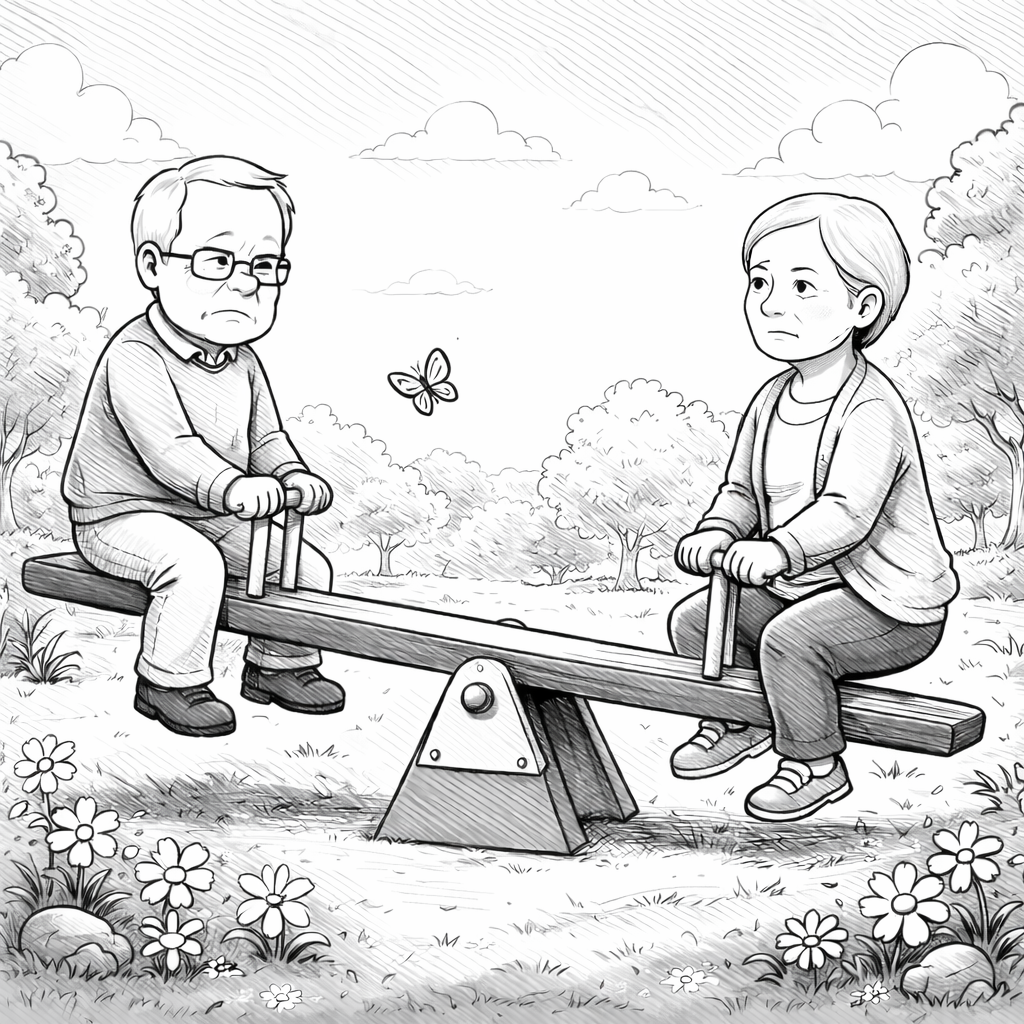
We broke up and then reconciled many more times than I can count. Our endings never quite held. Sometimes they were quiet, other times louder and more-obviously decisive, but during the five years we tried, I became conditioned to believe that none of them were truly final.
She had many ways of reappearing in my life: a text; a voicemail; a call; more than once, a knock on my door. At one point, a sighting on the bike path resulted in a conversation that turned into something else. Then, despite whatever resolve I had constructed in her absence, I would find myself drawn back in.
In March 2020, I started back into therapy. It was there that I was introduced to Attachment Theory, which provided a framework for understanding what felt, at the time, both confusing and inevitable. In simple terms, some individuals move toward closeness when a bond feels uncertain, while others move away when the closeness feels threatening. The anxiously-attached partner leans in, trying to secure the connection. The avoidantly-attached one withdraws, trying to protect a sense of independence. Neither position feels optional from the inside; people are, in many ways, hard-wired from early in life.
Gwen and I fit this pattern with an uneasy and predictable precision. The more distance I felt, the more I tried to close it. The more I tried to close it, the more she needed to back away. While there was an intensity to our reunions that suggested a renewed closeness, it rarely held for long.
Over time, I came to understand a bit more about her beginnings. As the oldest child, early in life she was left with her grandmother for a time while her mother went on to build a life that did not include her. I do not pretend to draw straight lines from that fact, but it is not difficult to imagine how early abandonment might echo later in life, shaping how closeness is approached and how distance is managed.
Of course, it is only fair to acknowledge that I brought my own baggage into this relationship. My mother was physically present throughout my childhood, but I rarely experienced her as emotionally available or supportive. Looking back, it is not hard to see how that absence, of a different kind, may have left its own imprint, shaping my need for reassurance and a hyper-sensitivity to distance.
We even tried, toward the end, to step out of our destructive pattern and call it “friendship.” That, too, proved to be fraught with difficulty. Too much had been said, and unsaid. Too many endings had left us wounded and scarred. Whatever ease friendship requires, we had long since worn it down.
In the end, the final separation came not with a shared understanding, but with a story that could hold. She came to see me as the one who had wronged her, and while I did not share that view, I came to understand how it made a clean ending possible where none had existed before. She stopped knocking on my door.
Now, as I approach my seventy-ninth birthday, I see quite clearly how much of this decade of life was spent inside a relationship that just did not have enough positive emotional adhesive to endure. We’re now over two years down the road from our last contact and I still think of all the painful times shaped by that push-and-pull dynamic. As Kessler reminds us, life continues, making its way around and through both the love and the loss.
Soundtrack Suggestion
I was on my way to you and I was worried
I was all torn up and nervous cause I knew that you’d be gone
I knocked and crossed my fingers while I waited
And I couldn’t hold the teardrops when I walked away alone
It’s all over, it’s all over, my heart echoed
Every minute that you cry for her is wasted don’t you know
It’s all over, it’s all over, so forget her
Stop your cryin’ turn around and let her go, let her go, boy
Let her go
(“It’s All Over” — Johnny Cash)
Meditations on Time
Here I am, at age 78, seemingly surrounded by stories about time. These stories naturally have a way of turning my thoughts toward how short my own time may be.
I just reread a novel in which every adult on the planet receives a box containing a string that reveals exactly how long they will live. And I’m recalling the television comedy about a moral accounting system that tracks a person’s life here on Earth. Finally, there’s the recent film that imagines we get to choose the precise form our eternity will take.
I did not set out to braid these snippets of our popular culture together. They braided themselves. At this age, time insists on being the subject.
The reminders are constant. Obituary columns, for one. My personal calendar, for another, which now includes far more medical appointments than it once did. Routine blood work. MRI, CT and DEXA scans. Follow-ups, with each visit carrying the distinct possibility that this will be the one where the doctor pauses too long before speaking. Most of the time the news is ordinary. “See you in six months.” But the suspense never quite disappears.
In Nikki Erlick’s 2022 novel The Measure, a mid-life character suggests that a string long enough to reach age eighty would count as good news. When I read that passage, I felt a small jolt. Eighty no longer feels like a distant horizon. It is a number that is uncomfortably close.
If I opened my box today, I would automatically have a long string. The real question would be: how much longer? A year? Five years? Ten? More? Though If I died today, surely no one would lament that I was gone before my time.
All of which leads to other concerns. How many more years would I want if they are shadowed by increasing pain — or other physical or mental decline? Longevity, at this stage, is not automatically the goal. There are conditions.
The Good Place, the four-season television series originally airing on NBC (and now available on Peacock), begins with a moral scoring system; every human action or interaction earns positive or negative points. An endless array of cosmic accountants supposedly keeps track of these tallies someplace up there in the sky, and when you die your final count decides your destiny. It is morality, and judgment day, rendered as a dispassionate spreadsheet.
At 78, that premise feels less like satire and more like a quiet audit. I find myself reviewing my own ledger. Have I been good? Not necessarily accomplished. Nor productive. But good?
My entries must be mixed. I have lived and loved imperfectly. I have hurt people I did not intend to hurt. There are relationships that did not endure. Some ended gently. Others did not. Even now there is sadness attached to those chapters, a sense that certain conversations might have gone differently if I had been wiser, braver or simply more skilled.
I sometimes wonder whether those endings count against me, or whether they merely show that I kept trying to connect and sometimes failed.
The show ultimately dismantles its point system, though. Life, it suggests, is far too entangled for simple math. Growth matters more than totals; it matters more than being flawless.
What lingers for me now is the series’ ending. Even paradise becomes hollow if it stretches on forever. In the final season, the characters are offered an exit. They step through one last door when they feel complete. Eternity with no ending, the show suggests, flattens meaning.
So, I wonder: How, ultimately, will I measure my existence? Will there ever be a time when will I feel complete?
Those questions followed me into the 2025 film Eternity, now on Apple TV, where humanity is invited to choose the form one’s forever will take. The idea sounds appealing at first. Pick your paradise. A tropical beach, for example. Perfect weather. Endless calm.
But what would that mean after a thousand years? Ten thousand? How could any single scene, no matter how beautiful, sustain significance without limit? Without scarcity?
Part of what makes a late-life conversation more vivid is precisely that it may not be repeated endlessly. Scarcity is what gives weight to life’s ordinary moments.
If I knew the precise length of my string, maybe I would live differently. I might rush to repair what remains frayed. Or I might grow cautious, conserving energy. Uncertainty leaves me in between. Aware of the limit, but not of its measure. Isn’t it that uncertainty that keeps life from becoming either frantic or complacent?
If there is a ledger somewhere, I hope it records effort. That it shows I kept revising myself. That I tried to mend what I could. That I did not stop growing simply because the horizon drew closer.
I am not eager to open the box. And I am not certain I want a tropical eternity with no horizon. I only know that the ticking is audible now. Doctor visits. Quiet evenings. Old relationships to ponder. Meditations on time.
Age 78. Still adding to the ledger.
Poetry Selection: The Summer Day
Who made the world?
Who made the swan, and the black bear?
Who made the grasshopper?
This grasshopper, I mean —
the one who has flung herself out of the grass,
the one who is eating sugar out of my hand,
who is moving her jaws back and forth instead of up and down —
who is gazing around with her enormous and complicated eyes.
Now she lifts her pale forearms and thoroughly washes her face.
Now she snaps her wings open, and floats away.
I don't know exactly what a prayer is.
I do know how to pay attention, how to fall down
into the grass, how to kneel down in the grass,
how to be idle and blessed, how to stroll through the fields,
which is what I have been doing all day.
Tell me, what else should I have done?
Doesn't everything die at last, and too soon?
Tell me, what is it you plan to do
with your one wild and precious life?
-Mary Oliver
A Big Bold Beautiful Journey
I went into A Big Bold Beautiful Journey (2025), recently made available on Netflix, with absolutely no sense of the storyline. Sometimes that’s the best way to encounter a film. With no expectations to manage and no trailer logic to undo, you’re free to simply watch and see what happens. What I found was a fantasy-based romantic comedy that takes itself rather seriously at times, moves at its own pace, and ends up having more to say than I expected. I recommend it.
The film opens at a generically named “Car Rental Agency,” where David (Colin Farrell) encounters two unusually quirky employees, Kevin Kline as the Mechanic and Phoebe Waller-Bridge as the Cashier. David is on his way to a friend’s wedding. The car he rents, a 1994 Saturn SL, comes equipped with a GPS unit that quickly establishes itself as a character in the story.
At the wedding, David locks eyes with Sarah (Margot Robbie), and the two engage in flirtatious, slightly offbeat banter at the reception. At one point, Sarah semi-seriously asks David to marry her, a moment that clearly unsettles him. What is he to make of this unconventional woman? When Sarah then asks him to dance, he declines. Later, she leaves with another man.
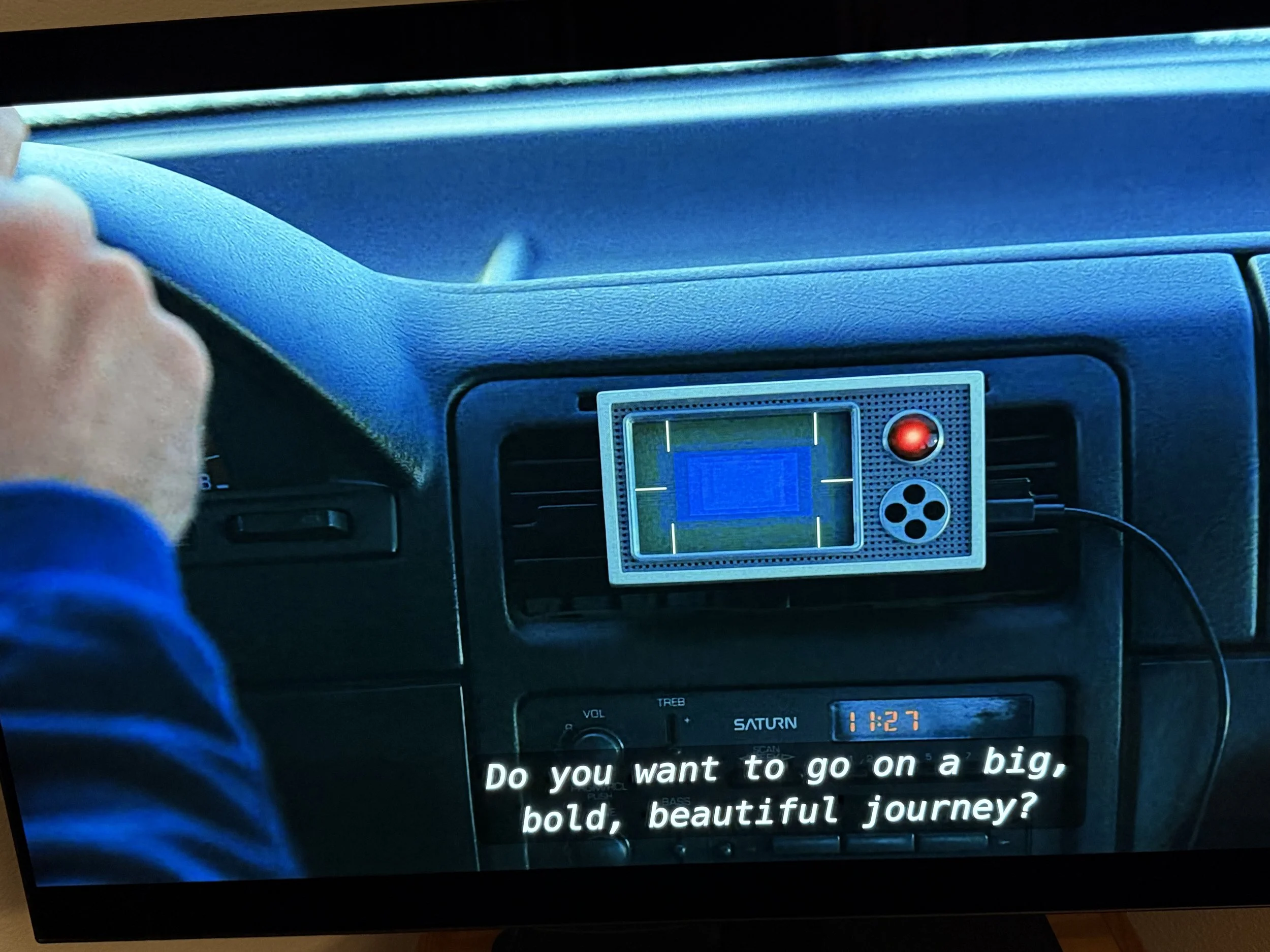
Driving home, the GPS asks David if he’d like to go on a big, bold, beautiful journey. He agrees, and with that, the film’s fantasy premise is underway. David is soon instructed to take the next exit and order a fast-food cheeseburger. Inside the restaurant, he discovers Sarah, also eating a cheeseburger. When they leave, Sarah’s car, another Saturn from the same rental company, refuses to start, and David’s GPS instructs him to offer her a ride. She accepts, and the two begin sharing the rest of the drive home.
From there, the film settles into its central rhythm. The GPS directs David and Sarah to a series of roadside stops that turn out to be doors, both literal and metaphorical. Behind each door lies not so much a place as a moment in time. These episodes are drawn from the characters’ pasts, and what’s striking is how matter-of-factly they accept what’s happening. There is only a modicum of astonishment. David and Sarah step into these moments as if the past were still physically present, waiting to be revisited.
One door, for example, takes them to David’s high school on the night he is starring in the class musical, How to Succeed in Business Without Really Trying. He plays the lead role of J. Pierrepont Finch, with Sarah and his parents watching from the audience. During the show, David relives a painful romantic rejection, confessing his feelings to a costar offstage and then, in an impulsive moment, temporarily derailing the production by confronting her onstage with blunt observations about the life she will go on to lead.
In a later scene, they stop at a decaying roadside billboard with an opening that leads into a café. Inside, two conversations unfold at once. David’s former fiancée presses him for an explanation about the end of their engagement, while Sarah revisits the collapse of a relationship with a former boyfriend. Eventually, the two conversations merge, with all four characters seated at the same table. David and Sarah are given an unusually revealing view of how each has behaved in earlier relationships, and both are forced to acknowledge their own intimacy issues.
By this point, it’s very clear that this big, bold, beautiful journey is less about time travel than about self-examination. As David and Sarah move through these episodes together, the focus remains on how they respond to what they learn about one another. They watch. They ask important questions. They engage in remarkable amounts of self-disclosure. The film allows these moments to unfold slowly. The pace worked for me, though I can see why others might find it trying. This is not a movie in a hurry.
What the film seems most interested in is not whether David and Sarah will end up together, but what it means for two people to really see one another. By the time you’ve lived a while, introductions are never clean. Everyone arrives with baggage, earlier versions of themselves still visible around the edges. A Big Bold Beautiful Journey makes that idea concrete, and in doing so, captures something emotionally recognizable.
I was willing to go along with the unlikely premise and the deliberate pacing largely because the performances are so grounded. The connection between Farrell and Robbie builds through pauses, glances, shared silences and, often, moments of unusually deep honesty. That connection feels earned, not manufactured.
What stayed with me afterward was not a particular scene or line of dialogue, but the film’s underlying suggestion that not every meaningful encounter has to resolve into something permanent. Some meetings matter because they clarify where you are, or because they briefly align two lives that have been moving along separate tracks. That idea resonated with me more than any conventional romantic payoff might have.
Not everyone will be taken with this film. It asks for patience and a tolerance for ambiguity. It treats human connection as something provisional and fragile, shaped by timing and circumstance, and often understood only in retrospect.
By the end, A Big Bold Beautiful Journey felt less like a romance than a meditation on how lives intersect, diverge, and occasionally overlap just long enough to matter. For me, that made the journey worth taking.
Soundtrack Suggestion
When people keep repeating
That you’ll never fall in love
When everybody keeps retreating
But you can’t seem to get enough
When tragedy befalls you
Don’t let it drag you down
Love can cure your problems
You’re so lucky I’m around
Let my love open the door
Let my love open the door
Let my love open the door
To your heart
(“Let My Love Open the Door” — Pete Townshend)
Generosity and Free Will
“I was trying to figure out what I should have already told you, but I never have. Something important, something every father should impart to his daughter. I finally got it: generosity. Be generous, with your time, with your love, with your life.” [From a terminally-ill, near death, Dr. Mark Greene, to daughter Rachel, during “On the Beach,” an episode of “ER,” May 9, 2002; emphasis mine.]

I wrote last time about my fall on the ice during the recent storm. As reported, I did not break any bones; however, the residual effects of the mishap continue to linger on. The trauma of the tumble seems to have taken up residence in my lower and upper back – as well as in my psyche. My spirits are quite low.
In the first two weeks after the storm, I had massage, physical-therapy, and Zero-balancing sessions – in addition to my regularly-scheduled therapy appointment. At this point, though, my recovery still has a way to go. I need significantly more time – andhelp- to facilitate my healing.
In questioning my life’s choices during this period of blueness, I reviewed an essay from February 2006 here on Musings entitled “Generosity.” I have had reason to reflect again on the meaning of this term and specifically its place in the context of friendship.
What am I talking about? Well, I now have reason to believe that what I had experienced as acts of generosity from a friend were, perhaps, deeds that had been misinterpreted by me. I now suspect that perhaps some kind of relational score-keeping had been in play. This has sent me even more into an emotional tailspin, leading me into a deeper examination of my own behavior; to wit: Who am I as a friend? Am I in search of some kind of reciprocity rather than act from a generous spirit? Am I generous enough with my love? My time? My energy? My life? Who am I, really? And, in this context, how am I perceived by others?
