Aging, Love, Life, Personal Growth Jim Arnold Aging, Love, Life, Personal Growth Jim Arnold

The Shape of What Didn’t Hold

Not long ago, I wrote about Lauren Kessler’s Everything Changes Everything, a memoir that revolves around love, loss, and what it means to keep on living. It is, in many ways, a simple proposition. We form attachments. We lose them. And then, ready or not, we find a way to move on.

My last significant relationship, with Gwen (not her real name), comes to mind when I think about all that.

We met on her sixty-fifth birthday, in March 2019, when I was in my early seventies. I remember attaching a certain significance to that date, as if the timing itself carried meaning. At our age, it felt possible, even sensible, to imagine that what began then might be the last relationship for each of us. There was comfort in that idea. An appeal. A sense of arrival. Or at least of being done with new beginnings.

What followed, instead, was the start of a pattern that led to considerable pain for both of us.

We broke up and then reconciled many more times than I can count. Our endings never quite held. Sometimes they were quiet, other times louder and more-obviously decisive, but during the five years we tried, I became conditioned to believe that none of them were truly final.

She had many ways of reappearing in my life: a text; a voicemail; a call; more than once, a knock on my door. At one point, a sighting on the bike path resulted in a conversation that turned into something else. Then, despite whatever resolve I had constructed in her absence, I would find myself drawn back in.

In March 2020, I started back into therapy. It was there that I was introduced to Attachment Theory, which provided a framework for understanding what felt, at the time, both confusing and inevitable. In simple terms, some individuals move toward closeness when a bond feels uncertain, while others move away when the closeness feels threatening. The anxiously-attached partner leans in, trying to secure the connection. The avoidantly-attached one withdraws, trying to protect a sense of independence. Neither position feels optional from the inside; people are, in many ways, hard-wired from early in life.

Gwen and I fit this pattern with an uneasy and predictable precision. The more distance I felt, the more I tried to close it. The more I tried to close it, the more she needed to back away. While there was an intensity to our reunions that suggested a renewed closeness, it rarely held for long.

Over time, I came to understand a bit more about her beginnings. As the oldest child, early in life she was left with her grandmother for a time while her mother went on to build a life that did not include her. I do not pretend to draw straight lines from that fact, but it is not difficult to imagine how early abandonment might echo later in life, shaping how closeness is approached and how distance is managed.

Of course, it is only fair to acknowledge that I brought my own baggage into this relationship. My mother was physically present throughout my childhood, but I rarely experienced her as emotionally available or supportive. Looking back, it is not hard to see how that absence, of a different kind, may have left its own imprint, shaping my need for reassurance and a hyper-sensitivity to distance.

We even tried, toward the end, to step out of our destructive pattern and call it “friendship.” That, too, proved to be fraught with difficulty. Too much had been said, and unsaid. Too many endings had left us wounded and scarred. Whatever ease friendship requires, we had long since worn it down.

In the end, the final separation came not with a shared understanding, but with a story that could hold. She came to see me as the one who had wronged her, and while I did not share that view, I came to understand how it made a clean ending possible where none had existed before. She stopped knocking on my door.

Now, as I approach my seventy-ninth birthday, I see quite clearly how much of this decade of life was spent inside a relationship that just did not have enough positive emotional adhesive to endure. We’re now over two years down the road from our last contact and I still think of all the painful times shaped by that push-and-pull dynamic. As Kessler reminds us, life continues, making its way around and through both the love and the loss.


Soundtrack Suggestion

I was on my way to you and I was worried
I was all torn up and nervous cause I knew that you’d be gone
I knocked and crossed my fingers while I waited
And I couldn’t hold the teardrops when I walked away alone

It’s all over, it’s all over, my heart echoed
Every minute that you cry for her is wasted don’t you know
It’s all over, it’s all over, so forget her
Stop your cryin’ turn around and let her go, let her go, boy
Let her go

(“It’s All Over” — Johnny Cash)


Read More
Aging, Boomer, Love, Life Jim Arnold Aging, Boomer, Love, Life Jim Arnold

Horizontal Compatibility

Online dating, at my age, raises questions one does not always anticipate. Some of them, it turns out, are… positional.

Not long ago, a woman on OurTime (a dating site for seniors) recently “liked” my profile. I liked her back and sent a message suggesting that we meet. Then: nothing. Four weeks passed. I ultimately filed the whole thing away under “oh, well.” I admit, I forgot all about her.

But eventually she wrote back.

So then I found myself, somewhat to my own surprise, heading out for my first first date since March 2019. This fact alone felt like an event worth noting.

The meeting itself, at a local Starbucks, went well. More than well, actually. We talked for more than an hour and a half without effort. The conversation had range, some depth, even a bit of spark. At the end, there was a hug that she initiated. Not the standard-issue, socially-prescribed hug, but a long, sustained, quietly-mutual embrace. The kind of physical contact that lingers just enough to suggest possibility.

I drove home thinking, well, that was nice.

The next day, I wrote to say I’d enjoyed meeting her and would be glad to get together again.

Her reply was, and I quote:

“id like to meet again if we spend most of that time hugging. Hmm where would that be possible”

Now, as suggestions go, this was not one I was inclined to reject. I even confessed, in a moment of candor, that I might qualify as a very touch-deprived individual. And so it seemed that we had entered into a mildly flirtatious exchange, one with a surprisingly clear agenda.

But then came the practical question: where does one go to engage in sustained, low-ambiguity hugging?

She thought maybe a park. A blanket. Perhaps a picnic.

And now it is here is where the narrative takes a decisive turn toward the absurd.

I explained, as plainly as I could, that lying on the ground — grass, sand, or any other surface that requires one to interface directly with the planet — is not something my back, hip, and leg nerves are inclined to negotiate well. This was not about getting up afterward. This was about being down there in the first place. So, yep, I had reservations about this idea.

And let’s be clear: we are talking about two 78-year-olds here. The image of both of us gracefully arranging ourselves on a blanket, then remaining there in some extended state of horizontal embrace, begins to feel less like romance and more like a logistical exercise requiring advance planning and possibly the temporary services of a personal aide.

Her response was brief and decisive. Again, I quote:

“Regretfully, if you’re not capable of laying down on a blanket with me, I guess we’re not a match”

And just like that, a door closed.

There is something almost admirable in the specificity, simplicity and clarity of the rejection. Not about conversation. Not about compatibility. Not about chemistry. Entirely about: blanket viability.

One imagines her revising her profile to include: “Must enjoy meaningful conversation and prolonged horizontal hugging in outdoor settings.”

Rejection, however it arrives, still has a way of landing, though. And land it did. Not dramatically, but just enough to be noticed, a small shift in the internal weather. And then, as these things tend to do, the storm passed, leaving behind the memory of that unexpectedly good hug.

Thank you, universe, for that.


Soundtrack Suggestion

And when the night falls, and when the sky falls,
I long for your embrace.
Another daybreak, another heartache,
I long for your embrace.

(“Embrace” — Bee Gees)


Read More
Boomer, Life, Health & Wellness, Travel, Aging Jim Arnold Boomer, Life, Health & Wellness, Travel, Aging Jim Arnold

Shrinking

Shrinking.” noun: a popular series on Apple TV.

“Shrinking.” adjective: becoming smaller in size or amount.

Lately, the word brings the TV show to mind first. Harrison Ford, Jason Segel, and Jessica Williams play therapists sharing a small private practice. I’m quite fond of it. It manages to be funny while taking on friendship, parenting, grief, and the frequent ethical angle. I really look forward to each episode.

But there is also a more personal meaning these days: becoming smaller in size. It turns out that is not just a definition; it is my life.

The older I get, the smaller my world becomes.

Last fall I traveled to my high school reunion, only the second trip I’ve taken since the pandemic. Both trips have been to small-town northern Wisconsin. Travel has become such a physical ordeal that I now approach it with the strategic planning of a minor military operation. Fortunately, I had enough frequent flier miles to upgrade to first class each time. I am not sure I would have survived the cattle-car-in-the-back alternative. Or at least with not much dignity; my claustrophobic tendencies would likely have taken up too much attention.

Closer to home, my world has settled into a familiar circuit. The UPS store for my Amazon packages. Three grocery stores in regular rotation. And then the medical offices. So many medical offices! I seem to have assembled quite an impressive team of specialists, each responsible for a different body part that is no longer performing as originally advertised. Most of these businesses and offices are in North Eugene where I live. My ophthalmologist, pain doc, and therapist are in South Eugene.

Yes, I have a therapist. At this age. I still have issues.

There is also my daily walk, which remains essential for body, mind and spirit. Not that long ago I was walking three miles a day, more than a thousand miles a year. These days I manage about one mile, often pausing halfway to stretch and negotiate with my back. Spinal stenosis and its accompanying nerve pain have reset expectations. They have also reduced how often I attend protests or head out with a camera, both once reliable parts of my routine.

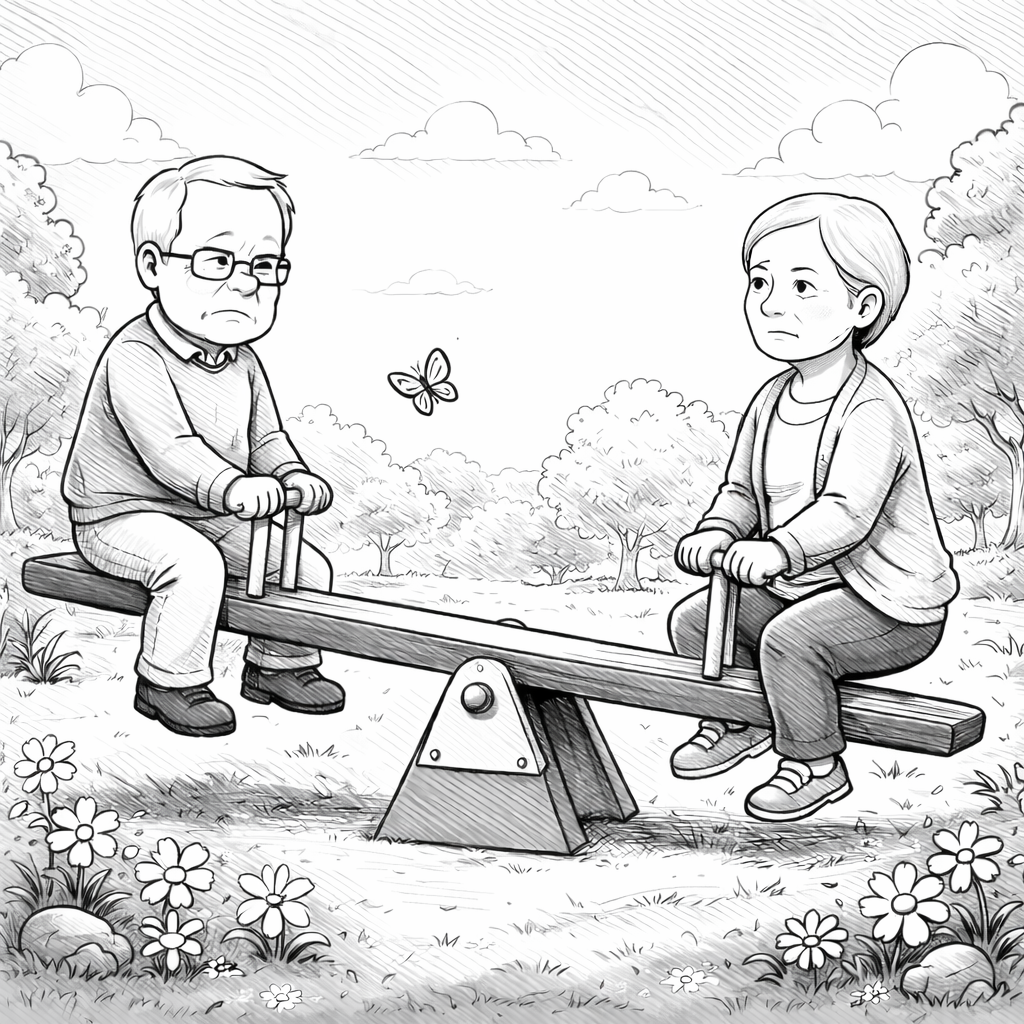
And then there is my height. I used to measure 5 foot 7 at my annual physical. Last month, even standing as tall as I could, I came in just under 5 foot 5. Apparently, I am not only aging, I am compressing. Yes, I have osteoporosis. I do not like this. In high school I was among the shortest in my class, often the last chosen for teams. I remember the feelings of inadequacy that resulted. While I am no longer being chosen for teams, the world is still a different place for a short man. It always has been.

What I am left with, it seems, is a smaller map. Fewer miles traveled, fewer places to go, fewer things I can easily do. Even a shorter reach upward.

Despite everything, though, I seem to be getting a better look at what’s right in front of me.

And if necessary, I suppose, I can always stand on tiptoe.

Soundtrack Suggestion

Well, I don’t want no short people
Don’t want no short people
‘Round here

Short people got nobody
To love

(“Short People” — Randy Newman)


Read More
Love, Life, Review, Travel, Writing Jim Arnold Love, Life, Review, Travel, Writing Jim Arnold

Everything Continues

I just finished reading Everything Changes Everything: Love, Loss and a Really Long Walk. At first, I thought this to be sort of a rather odd title. But it turns out to be spot on.

The author is Lauren Kessler, who lives here in Eugene, Oregon, or at least somewhere in the countryside around our city. I have known of her, heard her name now and again over the years. She has written several books and is considered a local literary presence. I had not read any of her earlier works, but last fall I came across her three-part series on food insecurity in our new, local online newspaper. I was struck by the depth of her reporting and the vividness of her writing. She placed herself in the story, not as a distant observer but as a participant, and what emerged were word pictures that stayed with me.

At the time, I learned that she would be publishing a new book in February, so I reserved a Kindle copy to be delivered on the publication date.

So that is how I came to know of the book. But I admit that I was also drawn to it, and ordered it, because of its promised discussions of love and loss. If you know anything about my writing, you know that I return to those topics with some regularity here in Musings. As it turns out, those themes are inseparable from the journey she undertakes.

The “really long walk” that Kessler documents is her journey along the Camino Francés, the ancient 500-mile pilgrimage that begins in the south of France, crosses northern Spain, and concludes at Santiago de Compostela, a famed Roman Catholic cathedral. The “love and loss” in the title refer to the twin deaths of her husband Tom, to cancer, and eight months later, her daughter Lizzie, to a drug overdose.

After these back-to-back earth-shaking tragedies, she writes that she desired “a solitary, immersive adventure, a physical, logistical, emotional challenge that would catapult me out of my life.” Prior to this, she had little familiarity with the Camino. She did almost no research about its history or even about how to navigate it. She notes, somewhat wryly, that she had not even seen Martin Sheen’s 2010 film The Way, a story about this very journey that nearly everyone she met along the path seemed to know well.

I came to the book with some prior familiarity. I had seen the film, read Shirley MacLaine’s earlier account, The Camino, and at one point in my life had even considered making the journey myself. That background did not diminish the experience of reading Kessler’s account. If anything, it sharpened my awareness of what she chose to notice, and what she chose to leave unexplained.

The book is organized in a way that draws the reader in completely, or at least that is how it worked for me. Alternating chapters follow the chronological progress of her walk, interspersed with non-time-linear accounts of the lives and deaths of her husband and daughter. Early on we learn that her husband’s torturous path through cancer led him to make use of Oregon’s Death with Dignity Act.

Kessler frames this work as a memoir, and that it is. But as I read, I could not help but experience it as something akin to a form of ethnography, an inquiry not only into a journey across a physical landscape, but into the social and emotional domains of grief. What emerges is a set of richly detailed first-person narratives, both of the walk itself and of the intimate, difficult terrain of illness, addiction, dying, death and loss. She observes not only the world around her but also her own responses, occasionally with a level of candor that does not place her in the most favorable light.

One passage in particular stayed with me. She describes her reactions to friends and acquaintances who attempted to express sympathy and support. She found herself recoiling from the superficial, hollow-sounding sentiments such as “sorry for your loss.” The observation follows from an earlier, critical blog post of hers entitled Performative Condolence.

I found myself sitting with her perspective for a while. Not because I agreed with it entirely, but because I recognized it contained some element of truth. Grief unsettles not only the person who carries it, but also those who try to approach it. We reach for familiar words, knowing even as we speak them that they will fall painfully short. Yet we offer them anyway because, for most of us, silence feels worse.

Kessler does not provide a tidy resolution to that discomfort. What she offers instead is something more useful: a sustained, honest account of what it is like to keep moving forward when the life you knew has been irrevocably altered. The walk becomes less a quest for answers than a way of continuing.

In that sense, the title is not strange at all. Everything changes. And then, somehow, of course, everything continues.


Soundtrack Suggestion

As I walk this land with broken dreams
I have visions of many things
But happiness is just an illusion
Filled with sadness and confusion
What becomes of the broken-hearted
Who had love that’s now departed?
I know I’ve got to find
Some kind of peace of mind

(“What Becomes of the Brokenhearted” — Jimmy Ruffin)


Update on May 21, 2026:

This essay/review was published as a Guest Viewpoint in the Eugene Weekly today.


Read More
Boomer, Life, Aging, Health & Wellness Jim Arnold Boomer, Life, Aging, Health & Wellness Jim Arnold

The Executor Dilemma

A Boy Scout’s Guide to Late-life Logistics

In my previous essay, I found myself reflecting on the subject of time. Writing it left me thinking much more seriously about how much of it I may have left. At my age — I’m now in my 79th year — existential angst is to be expected. Many friends and colleagues are now gone, while those of us still here seem increasingly occupied with managing one physical malady or another.

Ah yes, the maladies. They arrive in clusters at this stage of life, don’t they? For example, my walking regimen, once integral to both my physical and mental health, has become disturbingly limited. Chronic nerve pain from spinal stenosis now restricts my mobility, and more recently I have added compression stockings to my wardrobe to deal with peripheral edema. It really is no secret that a senior-citizen’s body is a full-time maintenance project.

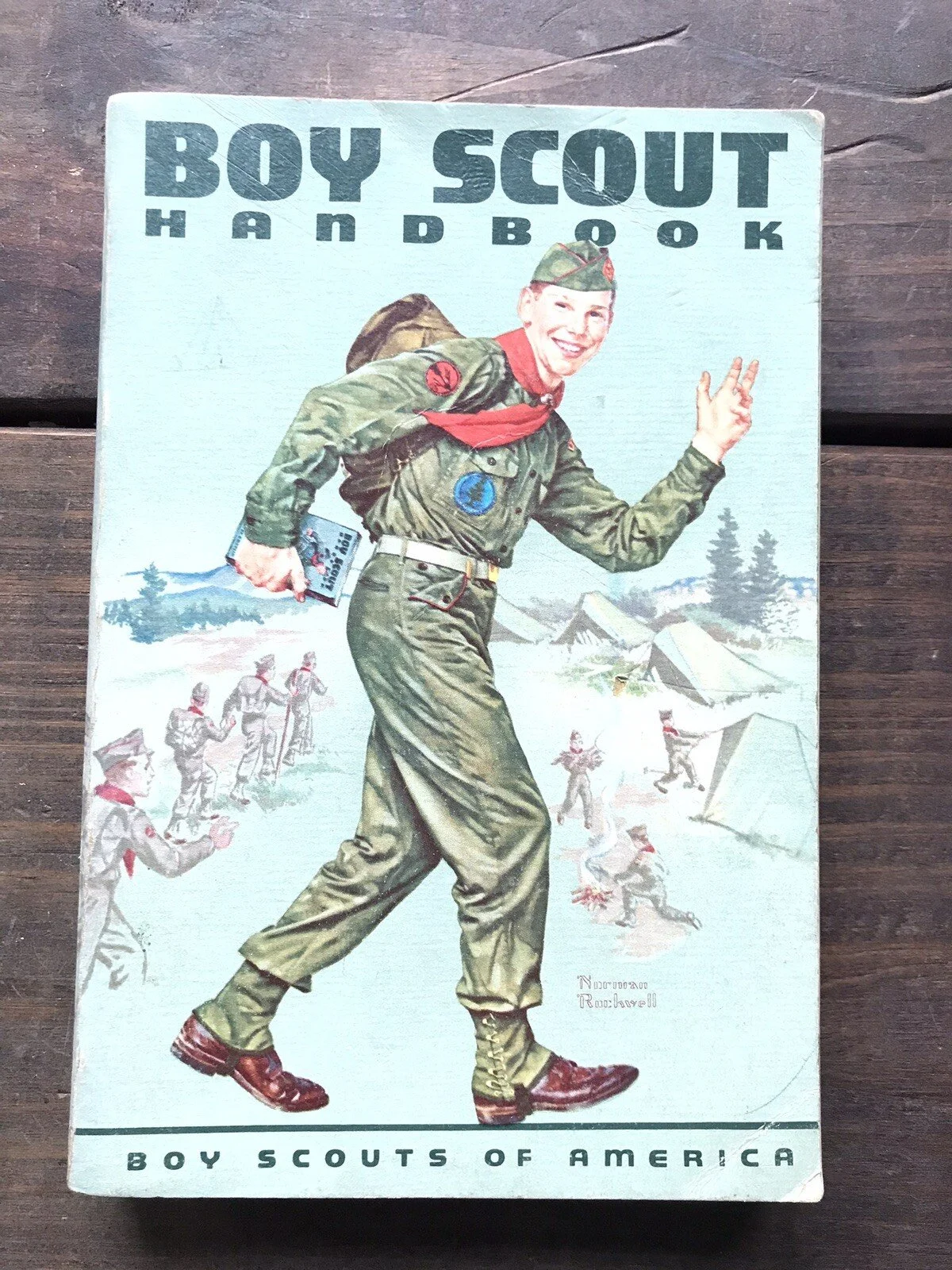
Now, as it happens, I was a Boy Scout in my youth, and the motto drilled into every Scout was simple: Be Prepared.

Robert Baden-Powell, the founder of Scouting, did not mean that only in the sense of carrying the right gear on a camping trip. He meant it as a way of approaching life itself. Think ahead. Get things in order before the moment arrives.

So. Let’s get real. It definitely is time for me to get serious about preparing for my Final Exit.

The pandemic, of course, had previously served to sharpen this realization. In 2020 I was well into the category of people considered highly vulnerable to COVID. Although we did not know the precise statistics at the time, we now know that people over 65 accounted for the vast majority of deaths from the disease. I behaved cautiously and, for whatever reason, never contracted the virus.

However, during that unsettling time, I did make a few modest strides toward “getting my affairs in order.” Ever since then, a white 9×12 envelope labeled Important Stuff has been attached to my refrigerator door, quietly waiting to be needed. Inside it are my Advance Directive, which I prepared back in 2014 (upon retirement), along with some basic information about my finances and where funds should be directed upon my death.

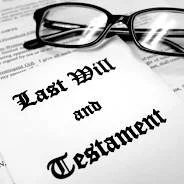
Of course, one rather obvious detail remained unresolved. Who exactly would carry out these wishes? I never actually completed a Will.

Not that I didn’t try. I went to the FreeWill website and started working through the prompts. Everything went smoothly until I reached the section asking me to name an Executor. Who would that be? I do not have a spouse or significant other, and most of my relatives live far away. Asking friends to take on the administrative burden of settling someone’s affairs felt like a rather large favor to request.

So the process stalled.

But I have just recently discovered that there are professionals who can perform this role. Licensed Professional Fiduciaries can serve as a Personal Representative, handling the various financial, legal, and logistical details that follow a person’s death. In cases like mine, where the estate is modest, the process may even be handled through a Simple Estate Affidavit rather than a lengthy probate proceeding.

I am still learning about how all of this works, of course, but I have already contacted a local firm that provides fiduciary services and requested an initial consultation.

None of this is especially dramatic; it is simply the quiet work of tidying up important details. It’s the kind of effort that is easy to postpone because the moment requiring it always seems far away. Yet eventually the time arrives. Deep down, we all know that.

And so I find myself returning to bits of advice first learned long ago in the Boy Scout Handbook. The lessons were about life. And now death.

Be prepared.


Soundtrack Suggestion

I’m not scared of dying 
And I don't really care
If it’s peace you find in dying
Well, then let the time be near

If it’s peace you find in dying
And if dying time is near
Just bundle up my coffin cause 
It’s cold way down there
I hear that's it’s cold way down there
Yeah, crazy cold way down there

(“And When I Die” — Laura Nyro; Blood, Sweat & Tears)


Read More