Is This How I Die?
I have walked almost every day for over forty years, including the past twelve on Eugene’s Ruth Bascom Riverbank Path System. I’m now retired and these walks remain essential to both my physical and emotional health, but the path no longer feels as safe as it once did. Several years ago, I began hugging the right side out of fear that a speeding cyclist might run me over. With e-bikes now racing along the same shared space, my concern has become even more urgent and I ask: Is this how I die?

That scenario seems even more plausible after the September 8 report in Lookout Eugene-Springfield about the planned overhaul of PeaceHealth Rides, our local bike-share program. Its operator hopes to replace the current fleet with 400 to 500 new bicycles by spring 2028, likely divided evenly between conventional bicycles and e-bikes. The e-bikes would have maximum speeds between 15 and 20 miles per hour. This could put 200 to 250 city-sanctioned e-bikes into circulation, including in the hands of first-time and inexperienced riders.
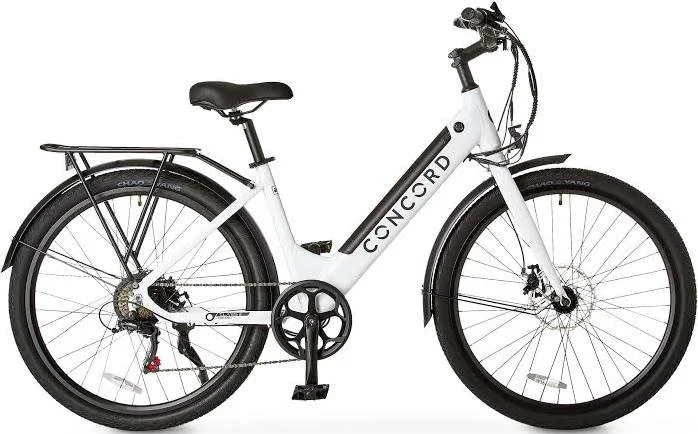
But let’s take a step back. Before Eugene embraces any such expansion, we should be clear about what an e-bike is. Oregon recognizes three classes, two of which stop providing electric assistance at 20 miles per hour. Class 3 provides pedal assistance up to 28. Then there are e-motos, powerful electric motorcycles often mistaken for e-bikes. Eugene says a throttle-powered vehicle without usable pedals is not legally an e-bike, even if its maximum speed is 28 miles per hour or less. E-motos are prohibited on Eugene paths, sidewalks, bike lanes and park trails.
On a shared path, Eugene says e-bike riders should travel no faster than 12 miles per hour when other people are present. Twenty miles per hour is allowed only when the rider is alone on the path. Cyclists must yield to walkers, pass on the left and give an audible warning. E-bikes are prohibited on sidewalks, and riders must be at least sixteen years old.
Despite the prevailing rules and laws regarding e-bikes, however, I don’t think concerns about my personal well-being are unreasonable. There are increasing numbers of reports surfacing that e-bikes are responsible for serious injuries to pedestrians. For example, earlier this year an 81-year-old Vietnam vet in Orange County, California, was killed by a 14-year-old driving recklessly on an electric motorcycle.
And then there is well-documented evidence about the negative consequences to e-bike riders themselves. An August 2026 NBC News report found that emergency-room visits involving e-bike and e-scooter injuries among children and teenagers had increased by more than 600 percent in three years. Head and neck injuries were among the most common. A Wisconsin pediatric emergency physician said accidents he once saw only occasionally had become a daily occurrence.
The local figures are equally sobering. As the Register-Guard reported in August, PeaceHealth Sacred Heart Medical Center treated 13 people for e-bike injuries in 2023 and 48 in 2025, an increase of roughly 250 percent. More than half of the injured riders in both years reportedly were not wearing helmets. Doctors are treating broken ribs, fractures, severe head injuries and facial trauma once associated mainly with motorcycles.
I recognize that many riders use e-bikes responsibly and that the technology can replace car trips or make cycling possible for older adults and people who are unable to ride conventional bicycles. A properly managed bike-share program might offer some advantages over privately-owned machines. But before adding hundreds of e-bikes, PeaceHealth Rides and its public partners should explain how they will verify riders’ ages, teach path rules, enforce the 12-mile-per-hour limit and respond when rented machines are used recklessly.
That Lookout report raises an even more alarming red flag. Brodie Hylton, executive director of Cascadia Mobility, said future options might include e-scooters or what he called a “pedalless e-bike.” Under Eugene’s own published definition, however, a throttle-only vehicle without usable pedals is not an e-bike. If officials are considering such vehicles, they must say precisely what they are proposing, where the vehicles could legally be ridden and how they would be kept off prohibited paths. A catchy new label cannot turn an electric motorcycle into a bicycle.
To keep both riders and pedestrians safe, Eugene needs more than a website, signs, educational campaigns and polite reminders. The city needs visible enforcement, including speed monitoring, citations for reckless riding and meaningful consequences for illegal e-moto use. Any PeaceHealth Rides expansion should include enforceable speed controls, clear identification of each vehicle and a system for suspending users who endanger others.
Rules that are not enforced are merely suggestions, and these suggestions offer little real protection to me as I walk beside the river. Eugene should address these issues before spending millions of dollars and placing hundreds of additional electric vehicles on our bike paths. It should not wait for me (or any other innocent bystander) to be killed before deciding that enforcement matters.
Editing Note: After posting a version of this essay on September 7, 2026, the very next day
Lookout Eugene-Springfield reported out on the developments with PeaceHealth Rides.
I subsequently revised the piece, and the final version is what you find above.
Update on September 15, 2026:
This essay, in a slightly-edited form, was published as a Guest Column in the Lookout Eugene-Springfield today.
Soundtrack Suggestion
How could I forget to mention
The bicycle is a good invention
Sitting there in a silent movie
Beside the only girl who really ever knew me
Happy days, but sad I’m facin’
Heaven knows I’m on the case, oh
How could I forget to mention the bicycle?
(“Bicycle Song” — Red Hot Chili Peppers)
Shrinking
“Shrinking.” noun: a popular series on Apple TV.
“Shrinking.” adjective: becoming smaller in size or amount.
Lately, the word brings the TV show to mind first. Harrison Ford, Jason Segel, and Jessica Williams play therapists sharing a small private practice. I’m quite fond of it. It manages to be funny while taking on friendship, parenting, grief, and the frequent ethical angle. I really look forward to each episode.

But there is also a more personal meaning these days: becoming smaller in size. It turns out that is not just a definition; it is my life.
The older I get, the smaller my world becomes.
Last fall I traveled to my high school reunion, only the second trip I’ve taken since the pandemic. Both trips have been to small-town northern Wisconsin. Travel has become such a physical ordeal that I now approach it with the strategic planning of a minor military operation. Fortunately, I had enough frequent flier miles to upgrade to first class each time. I am not sure I would have survived the cattle-car-in-the-back alternative. Or at least with not much dignity; my claustrophobic tendencies would likely have taken up too much attention.
Closer to home, my world has settled into a familiar circuit. The UPS store for my Amazon packages. Three grocery stores in regular rotation. And then the medical offices. So many medical offices! I seem to have assembled quite an impressive team of specialists, each responsible for a different body part that is no longer performing as originally advertised. Most of these businesses and offices are in North Eugene where I live. My ophthalmologist, pain doc, and therapist are in South Eugene.
Yes, I have a therapist. At this age. I still have issues.
There is also my daily walk, which remains essential for body, mind and spirit. Not that long ago I was walking three miles a day, more than a thousand miles a year. These days I manage about one mile, often pausing halfway to stretch and negotiate with my back. Spinal stenosis and its accompanying nerve pain have reset expectations. They have also reduced how often I attend protests or head out with a camera, both once reliable parts of my routine.
And then there is my height. I used to measure 5 foot 7 at my annual physical. Last month, even standing as tall as I could, I came in just under 5 foot 5. Apparently, I am not only aging, I am compressing. Yes, I have osteoporosis. I do not like this. In high school I was among the shortest in my class, often the last chosen for teams. I remember the feelings of inadequacy that resulted. While I am no longer being chosen for teams, the world is still a different place for a short man. It always has been.
What I am left with, it seems, is a smaller map. Fewer miles traveled, fewer places to go, fewer things I can easily do. Even a shorter reach upward.
Despite everything, though, I seem to be getting a better look at what’s right in front of me.
And if necessary, I suppose, I can always stand on tiptoe.
Soundtrack Suggestion
Well, I don’t want no short people
Don’t want no short people
Don’t want no short people
‘Round here
Short people got nobody
Short people got nobody
Short people got nobody
To love
(“Short People” — Randy Newman)
Everything Continues
I just finished reading Everything Changes Everything: Love, Loss and a Really Long Walk. At first, I thought this to be sort of a rather odd title. But it turns out to be spot on.
The author is Lauren Kessler, who lives here in Eugene, Oregon, or at least somewhere in the countryside around our city. I have known of her, heard her name now and again over the years. She has written several books and is considered a local literary presence. I had not read any of her earlier works, but last fall I came across her three-part series on food insecurity in our new, local online newspaper. I was struck by the depth of her reporting and the vividness of her writing. She placed herself in the story, not as a distant observer but as a participant, and what emerged were word pictures that stayed with me.
At the time, I learned that she would be publishing a new book in February, so I reserved a Kindle copy to be delivered on the publication date.
So that is how I came to know of the book. But I admit that I was also drawn to it, and ordered it, because of its promised discussions of love and loss. If you know anything about my writing, you know that I return to those topics with some regularity here in Musings. As it turns out, those themes are inseparable from the journey she undertakes.
The “really long walk” that Kessler documents is her journey along the Camino Francés, the ancient 500-mile pilgrimage that begins in the south of France, crosses northern Spain, and concludes at Santiago de Compostela, a famed Roman Catholic cathedral. The “love and loss” in the title refer to the twin deaths of her husband Tom, to cancer, and eight months later, her daughter Lizzie, to a drug overdose.
After these back-to-back earth-shaking tragedies, she writes that she desired “a solitary, immersive adventure, a physical, logistical, emotional challenge that would catapult me out of my life.” Prior to this, she had little familiarity with the Camino. She did almost no research about its history or even about how to navigate it. She notes, somewhat wryly, that she had not even seen Martin Sheen’s 2010 film The Way, a story about this very journey that nearly everyone she met along the path seemed to know well.
I came to the book with some prior familiarity. I had seen the film, read Shirley MacLaine’s earlier account, The Camino, and at one point in my life had even considered making the journey myself. That background did not diminish the experience of reading Kessler’s account. If anything, it sharpened my awareness of what she chose to notice, and what she chose to leave unexplained.
The book is organized in a way that draws the reader in completely, or at least that is how it worked for me. Alternating chapters follow the chronological progress of her walk, interspersed with non-time-linear accounts of the lives and deaths of her husband and daughter. Early on we learn that her husband’s torturous path through cancer led him to make use of Oregon’s Death with Dignity Act.

Kessler frames this work as a memoir, and that it is. But as I read, I could not help but experience it as something akin to a form of ethnography, an inquiry not only into a journey across a physical landscape, but into the social and emotional domains of grief. What emerges is a set of richly detailed first-person narratives, both of the walk itself and of the intimate, difficult terrain of illness, addiction, dying, death and loss. She observes not only the world around her but also her own responses, occasionally with a level of candor that does not place her in the most favorable light.
One passage in particular stayed with me. She describes her reactions to friends and acquaintances who attempted to express sympathy and support. She found herself recoiling from the superficial, hollow-sounding sentiments such as “sorry for your loss.” The observation follows from an earlier, critical blog post of hers entitled Performative Condolence.
I found myself sitting with her perspective for a while. Not because I agreed with it entirely, but because I recognized it contained some element of truth. Grief unsettles not only the person who carries it, but also those who try to approach it. We reach for familiar words, knowing even as we speak them that they will fall painfully short. Yet we offer them anyway because, for most of us, silence feels worse.
Kessler does not provide a tidy resolution to that discomfort. What she offers instead is something more useful: a sustained, honest account of what it is like to keep moving forward when the life you knew has been irrevocably altered. The walk becomes less a quest for answers than a way of continuing.
In that sense, the title is not strange at all. Everything changes. And then, somehow, of course, everything continues.
Soundtrack Suggestion
As I walk this land with broken dreams
I have visions of many things
But happiness is just an illusion
Filled with sadness and confusion
What becomes of the broken-hearted
Who had love that’s now departed?
I know I’ve got to find
Some kind of peace of mind
(“What Becomes of the Brokenhearted” — Jimmy Ruffin)
Update on May 21, 2026:
This essay/review was published as a Guest Viewpoint in the Eugene Weekly today.
Sardines in the Back Bar: My High School Reunion
I graduated from high school in 1965, right in the middle of that turbulent, unforgettable decade. Last month, I made the cross-country trek from Eugene, Oregon, to Rice Lake, Wisconsin, for my 60-year reunion.

Traveling to rural northern Wisconsin isn’t easy. These days, I take two days just to get there. This time I flew to Minneapolis via Seattle, rented a car, and drove to a nearby hotel in the dark. Car rentals, of course, come with their own set of challenges. I drive a 2020 Subaru Crosstrek at home, so when I found myself behind the wheel of a 2025 Nissan Rogue, I had to pause in the airport lot, dig out the 600-page manual, and acquaint myself with the vehicle’s basics. Eventually, I made it to the airport Holiday Inn Express, tired but in one piece.
Day two was the drive to Rice Lake. I stopped in Menomonie to see my friend “BA,” a classmate I’ve known since I was 12. We’ve been in steady contact — often over Zoom during and since the pandemic — so our conversation flowed easily, even if it wasn’t about anything in particular. Politics and religion are off-limits between us, so our chatter resembled a Seinfeld-style “conversation about nothing.” Still, it was grounding to reconnect before the busy weekend ahead.
On day three, I had breakfast with another classmate, “CJ.” We first reconnected at our 40th reunion and in recent times have grown a bit closer through regular Zoom calls. Our conversations are different from most — personal, probing, unafraid of difficult topics like family dynamics, belonging, and the choices that shaped our lives. Sitting across from her in person gave those exchanges a richness I rarely find elsewhere.
That evening was the first group gathering at a local pizza place. I had gone in with low expectations, and still, the chaotic setup surprised me: thirty or so people crammed into the back corner of a bar with no clear plan for how to mingle or sit together. Consequently, BA and I retreated to a booth for dinner before cautiously rejoining the group once the crowd thinned. To my relief, I found a few familiar faces and even received a warm hug from a female classmate who had been reading my writings over the years. Those small moments of recognition helped balance out the initial frustration.
The next morning, BA and I met again for breakfast, this time joined by “WJ.” Our conversation took a surprising turn when, at one point, he asked, “Do you believe in vaccines?” The question startled me, but to my relief, all three of us agreed. Still, it was a reminder of the cultural divide I often feel when I return to Rice Lake — a blue-leaning visitor navigating a visit to a deeply red part of the country.
Saturday night was the main event at Lehman’s Supper Club, the classic Rice Lake venue for special occasions. Drinks started at five, but I stuck with ginger ale while classmates sipped their cocktails. I chatted briefly with a few people, but the connections felt fleeting. Dinner was buffet-style, serviceable but unremarkable, and I found myself at a table where conversation was scarce. By 7:30, much of the room had emptied out.