Why Do Old Men Stop Trying?
I’m sitting in my usual spot at Starbucks this afternoon, looking at another old guy who is in my line of sight. He is wearing a frayed, ill-fitting, untucked flannel shirt over an untucked T-shirt, along with a pair of baggy jeans. His clothes may be clean (I can’t tell), but nothing fits, nothing coordinates, and nothing suggests that he gave his appearance a moment’s thought before leaving home.
I see versions of him everywhere. Obviously retired, senior-aged men appear at coffee shops, grocery stores, and doctors’ offices dressed as though they are spending Saturday afternoon cleaning the garage. Their hair grows past the point of intention, and their beards occupy some uneasy territory between five-o’clock shadow and pure neglect. Shirts droop, pants sag, and shoes appear to have been selected simply because they were near the door.
Of course, maybe I’m being unfair. I know that old age can make seemingly simple things difficult. From firsthand experience, I know that arthritis complicates buttons and shoelaces, while chronic pain drains energy once available for grooming. Our bodies change, familiar clothes stop fitting, and fixed incomes limit what can be replaced.
Depression and loneliness can also express themselves through one’s appearance. Sometimes a man who looks as though he has stopped caring has, in fact, stopped caring, but not without reason. Still, do those explanations account for all of what I am observing?
I suspect that many retired men simply decide they are finished making an effort. Who, after all, is going to call them out? The workplace once imposed minimum standards, and partnerhood may have supplied him with another person who noticed a stained shirt or suggested a haircut. Once those structures have gone away, some guys apparently decide that appearance no longer matters.
Me? I resist that conclusion. I get a haircut once a month. I shower and shave every day, wear clean clothes that fit, and try to look as though I knew I was going out in public when I got dressed. I even use body lotion in an attempt to smooth over some of my wrinkles.
Occasionally, finding clothes that fit requires more effort than simply taking something off the rack, though. Pants almost never come in precisely my size, so I buy the closest fit and have a seamstress alter them. I wear shorts, but not the voluminous old-guy (John Fetterman) kind that billow around the knees. I wear hoodies, too, provided they come in a size and cut that actually fit. My favorite, which I happen to be wearing today, says “HARVARD LAW (Just Kidding),” so clearly I am not arguing for formality. (My T-shirt, tucked in underneath, says “RESIST.”)
This is not vanity, or at least not entirely. I am not trying to look young, and I have no illusion that a well-fitting shirt or clean hoodie will disguise my age. (I am painfully aware that I am entirely invisible to younger women.) I simply want the clothes I wear to look chosen rather than surrendered to.
I am trying to look like a person who remains engaged with the world. Clothing is communication, even when we insist we are not communicating anything. Making some effort says that I expected to encounter other people today. It indicates that I recognize I am part of a shared environment and have not entirely withdrawn into my own private kingdom.
There may also be a question of dignity involved. Old age takes things from us without asking, including strength, balance, hair, smooth skin, and sometimes memory and the car keys. We cannot prevent every loss. Perhaps attending to my appearance is one small way of declining to decline.
I do not believe old men need expensive wardrobes, fashionable haircuts, or elaborate grooming rituals. A clean shirt that fits would accomplish quite a lot. So would shaving, or maintaining a beard as though one had deliberately chosen it.
The man across the room is entitled to dress however he pleases, and, as judgmental as this sounds, I am entitled to find the result dispiriting. What bothers me is not really his flannel shirt or baggy jeans. It is the possibility that they represent surrender, the idea that once a man retires and grows old, he no longer owes the visible world any sign that he is still participating in it.
This is where I come down: Even now at twelve years into retirement, I am not ready to give in. Tomorrow morning, I will shave, choose clothes that fit, and present myself to the world as someone who is still here. I encourage all you other old guys out there to give this some thought.
Soundtrack Suggestion
When I get older, losing my hair
Many years from now,
Will you still be sending me a valentine,
birthday greetings, bottle of wine?
(“When I’m Sixty Four” — Beatles)
The Weight of Books
I am in the process of getting rid of my book collection, and the experience has brought on a more profound sense of loss than I expected. I am not simply disposing of things I no longer need. As I remove the books from my shelves, I sometimes feel that I am losing pieces of myself.
Not long ago, I wrote about how my world is shrinking: fewer places to go, fewer things to do, fewer miles I can walk. I am even physically shorter. Now I am pondering another kind of shrinking as I continue to reduce the number of possessions I own.
I live in a 1,000-square-foot, two-bedroom upstairs apartment in Eugene, and everything I have, except my car, fits inside it. That was not true when I lived down in Marin County before I retired. In addition to all the things in my apartment, I rented a storage room for stuff I no longer used but was reluctant to discard. One summer, perhaps around 2011, I decided to empty it and lighten my load. I did not finish the project that summer, but I continued working on it during weekends and time off. By the summer of 2014, after many, many trips to Goodwill, the recycling center, and the dump, the storage room was empty. It was then that I moved back to Eugene, bringing only what would fit into my current apartment.
As I approach my eightieth year, I have come to truly appreciate the wisdom of this undertaking. I now practice downsizing as a lifestyle not a project; I try to dispose of one old item for every new one I bring home. This has worked reasonably well, except when it comes to books. I have been a reader and collector for most of my life, although I do not acquire rare books or valuable first editions. Whenever I wanted to read a book, or was just interested in one, I simply bought it. Eventually, it joined the steadily growing number in my bookcases.
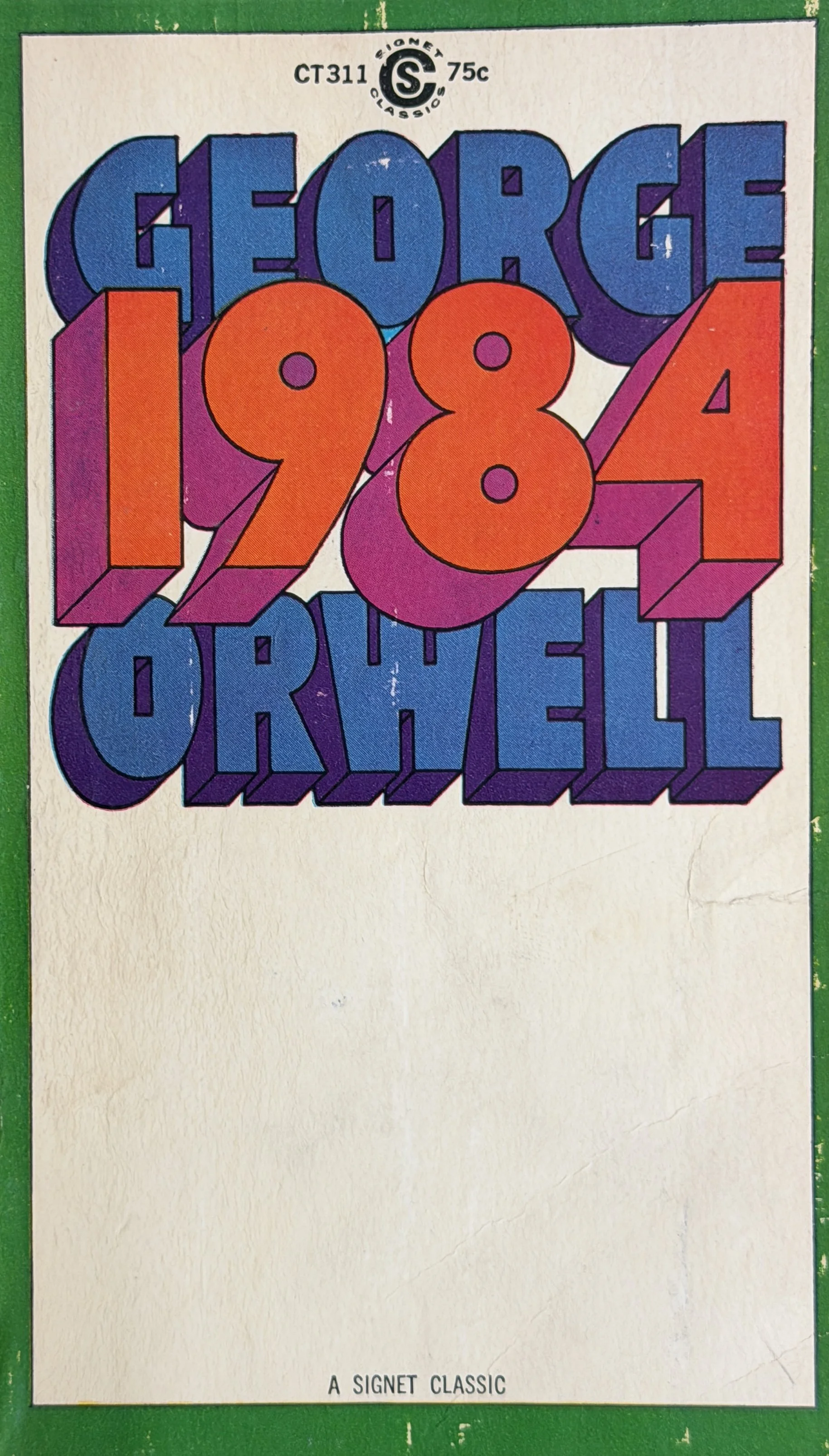
As a preteen and teenager, I read a great deal of science fiction. I spent summer days reading indoors while my mother implored me to go outside and play. Most of those early books have disappeared, but I still own a few paperbacks from high school, including the copy of George Orwell’s 1984 that was assigned reading.
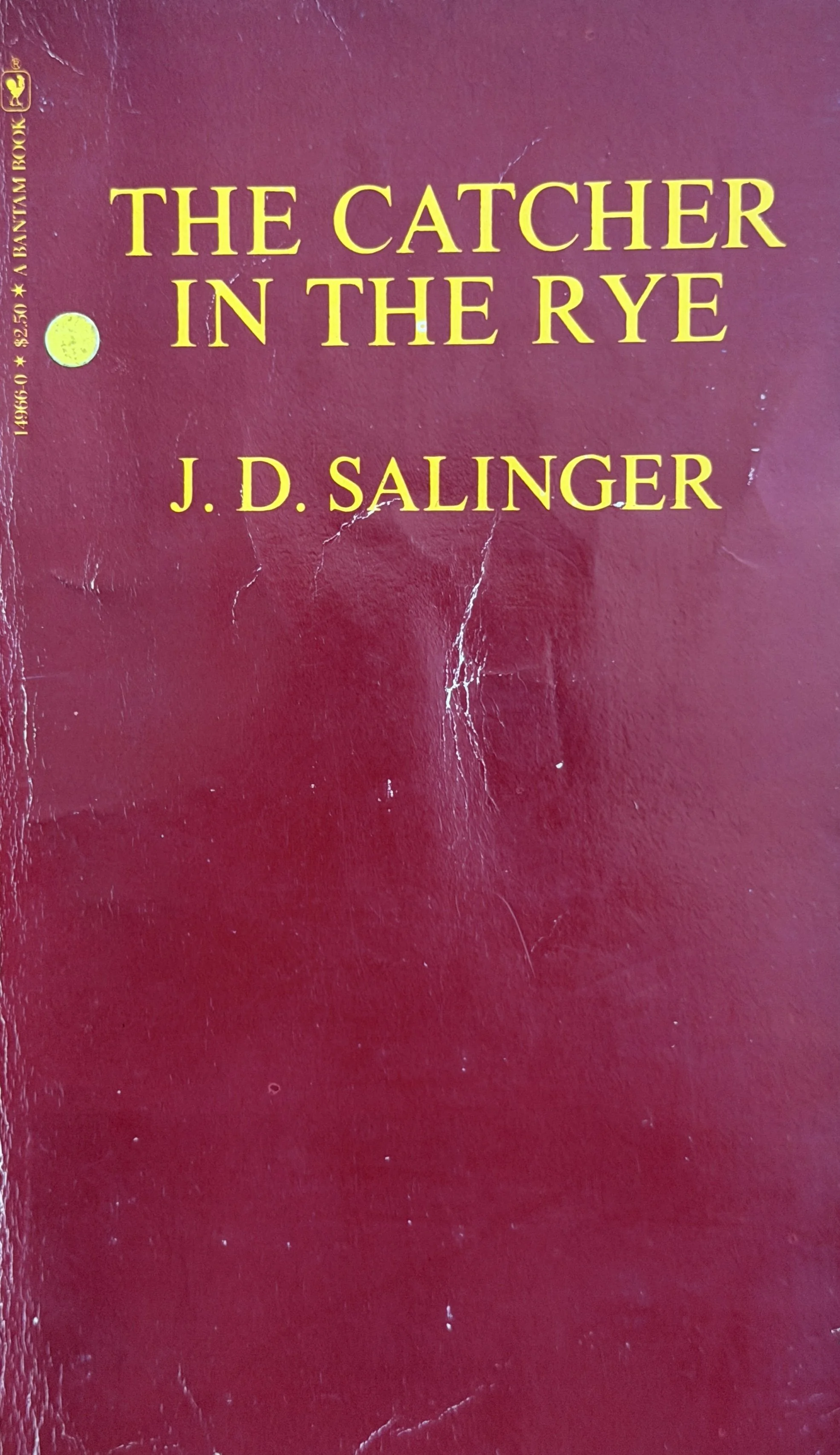
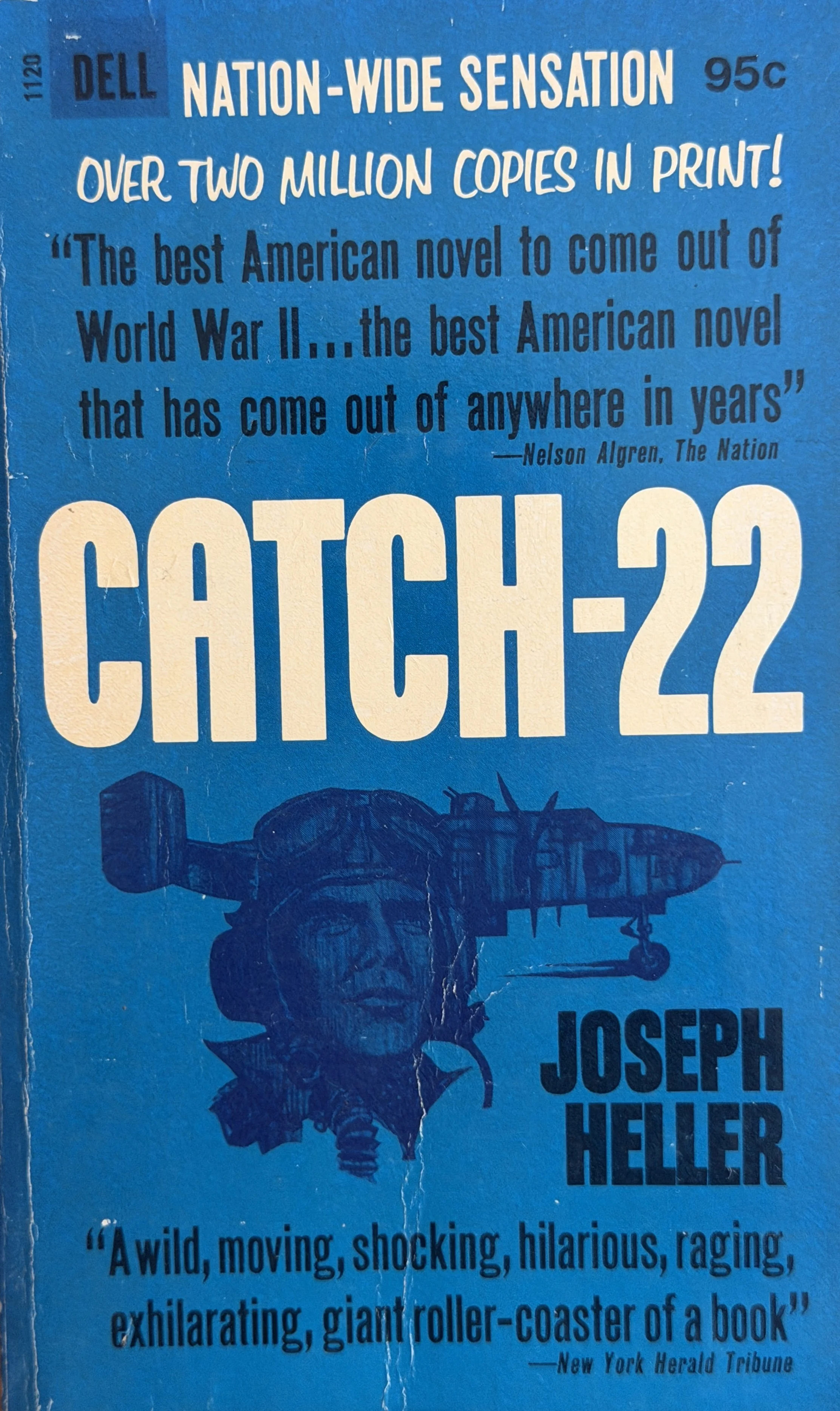
As just mentioned, not all my former collections have survived. During my early days in graduate school, I owned what amounted to a rather ambitious chemistry library, but those books also disappeared gradually over many moves. Giving them up was an earlier version of what I am doing now, although I do not remember experiencing quite the same sense of loss.
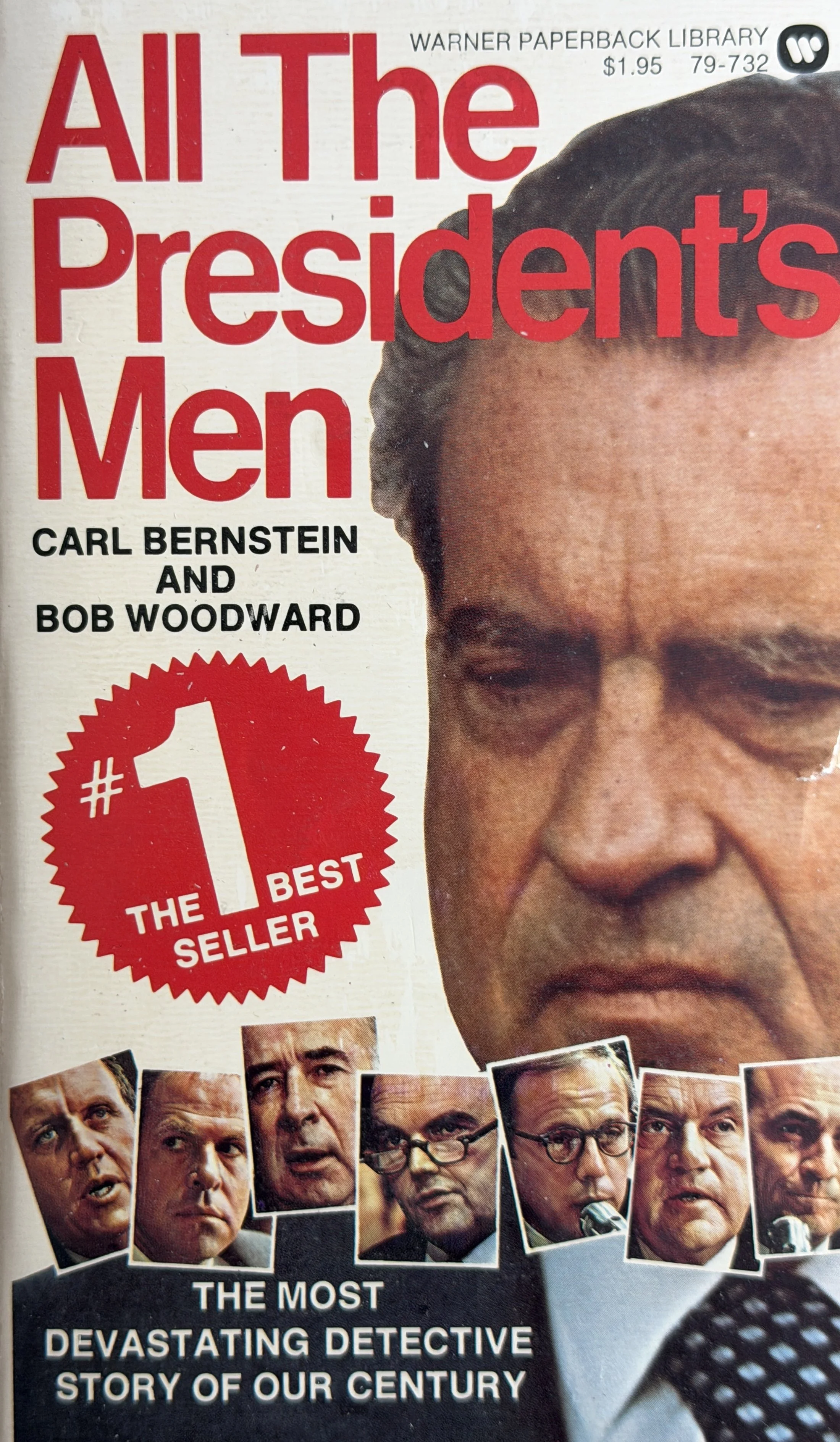
The books that remained reflect the changing interests and circumstances of my life. They included contemporary novels and biographies; and more books about photography, counseling, psychology, self-help, spirituality, travel, and health; and a collection about Watergate that began with All the President’s Men. My later doctoral work added books on higher education, qualitative research, American Studies, organizational culture, the history and philosophy of science, and epistemology.
Most of the physical weight I have lugged from city to city has been books. I have packed them, hauled them up and down stairs, and transported them from one home to another. For years, I accepted this as a routine part of life. Now I am considering a move into a senior residential community, where I will likely live in a one-bedroom or studio apartment. I cannot take all these books with me, and storing them makes little sense. The practical conclusion is clear, but carrying it out has been painful. I now buy books on Kindle, allowing me to continue reading without refilling the shelves I am trying to empty.
During the past few months, I have disposed of perhaps 300 to 400 books, still less than half my collection. I have sold roughly equal numbers to a local used bookstore and a buyer in Illinois. When I visit the bookstore, I take three banker’s boxes, each containing ten to twelve books. One box is about as much as I can safely carry down my stairs, so I take them down and lift them into and out of my car one at a time. I often have to bring some books back home.
The Illinois buyer has an app that lets me scan the barcodes on newer books and learn immediately whether it will accept them. Many older paperbacks have no barcodes, reminding me how long they have been with me. Each shipping box contains only ten to twelve books because I must carry it downstairs and into the FedEx store. Eventually, in the not too distant future, I will have sold everything anyone is willing to buy. I will have to donate them.

I understand the practical reasons for doing this. By disposing of them, it is my hope that at least some will find their way to new readers. Still, none of that eases my sense of loss. Together, these books form a record of my life: what I was curious about, what I studied, what work I did, what illnesses worried me, and what questions I hoped to answer. Some remind me of who I once was; others, of who I was trying to become.
That is why this feels so different from emptying a storage room. When I gave away unused household objects, I felt I was disposing of mere possessions. When I give away my books, I feel I am severing the physical and emotional attachments to different periods of my life.
For now, I plan to keep two shelves of books, about six linear feet. They are signed by their authors, written by people I know, or connected in some way to the core of my being. My will contains instructions for their eventual donation. I am not saving them forever, only admitting that I am not ready to part with them right now.
Perhaps that is all I can do. I can reduce the collection one manageable box at a time, knowing that every book will eventually leave my possession. (Or perhaps, more accurately, I will leave them.) For now, the only choice left is which pieces of my life I can let go of today and which I need to keep a little longer.

Soundtrack Suggestion
Dear Sir or Madam, will you read my book?
It took me years to write, will you take a look?
It’s based on a novel by a man named Lear
And I need a job
So I wanna be a paperback writer
Paperback writer
(“Paperback Writer” — Beatles)
My Own Clock
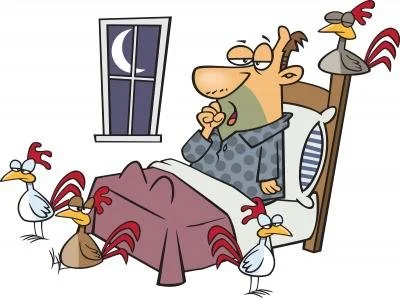
For most of my adult life, I believed I was a morning person. Whether I was working as a chemist in my twenties, attending graduate school in counseling in my thirties, teaching while completing my Ph.D. at Indiana University in my forties, or later serving as a college administrator, I was typically up and at ’em by 5:30 a.m. I assumed that was simply who I was: an early riser, a morning person. It has taken retirement to make me question whether the clock I lived by for so long was ever really my own.
As I look back, I recognize that my sleep pattern was among many rituals which remained remarkably consistent throughout my professional life. For example, I often stopped for breakfast on the way to work before arriving at an office that was mostly empty. How I valued that quiet first hour. The phone wasn’t ringing. Meetings hadn’t begun. No one was standing in the doorway with an urgent question. It gave me time to get oriented before the demands of the day took over.
I recall that during my years at IU, associate instructors could request the sections we wanted to teach. I always chose the 8:00 a.m. classes. Most of my graduate-student peers preferred something later, and undergraduates weren’t especially enthusiastic about early mornings either (an obvious understatement). That suited me just fine. I loved beginning the day before campus had fully awakened.
Then there was another idiosyncratic practice of mine. For years, on the left side of my desk, I kept a stack of papers. The issues demanding the most immediate attention were always on top. I continually shuffled them, working my way down as the day allowed. Those near the bottom sometimes waited for days or even weeks. More than once, a problem resolved itself before I ever reached it. (That strategy, in itself, continues to serve as a valuable personal and professional axiom: not every problem requires immediate action, and some require no action at all.) Like my early mornings, that stack became part of the architecture of my days.
Of course, there were occasional outside interruptions to my rhythms. Beginning in the late 1990s, an enlarged prostate led to increasingly problematic sleep. Four or five trips to the bathroom each night became routine. A TURP (the “roto-rooter” prostate surgery) procedure in 2011 helped enormously, but years of interrupted sleep had trained my body to wake repeatedly. Even after this medical issue improved, the habit of frequent awakenings lingered. But throughout it all, I remained an early riser.
Ultimately, retirement had its impact on my lifestyle. While there was no conscious decision to sleep in later, there simply was no longer a reason to get up before dawn. Without really intending it, I began getting up a little later. And then later.
Today I’m usually asleep by 10:00 and awake around 7:30, about two hours more sleep than during most of my working life. At age seventy-nine, I now sleep considerably more than I once did. That surprised me because I’d always heard that older adults need less sleep. Curious, I did a little reading and discovered the research isn’t nearly as settled as the popular wisdom suggests.
While I was at IU, one of my closest friends seemed to function quite well on four or five hours of sleep each night, but I always needed much more. We were both a little skeptical of the other’s sleeping habits. I couldn’t imagine getting by on so little sleep, and he probably thought I was a slacker. Looking back, I guess each of us believed our own rhythms to be the “normal” ones.
What has stayed with me, though, isn’t the research itself or the sleeping habits of others. Rather, different questions altogether poke through. If my body now prefers a schedule so unlike the one I had followed through most of my adult life, what’s changed? Has retirement simply given me permission to sleep more? Or had I spent decades assuming that my work schedule reflected my natural rhythm when, in fact, I had gradually adapted myself to the rhythms of the institutions where I worked?
For more than half a century, my life was organized around the schedules of schools, colleges, and universities. Over time, those rhythms became so familiar that I stopped noticing they belonged to the institutions where I worked. I experienced them as my own. I believed I was someone who naturally woke at 5:30 every morning. Maybe I was. Or maybe I had simply spent decades living by rhythms that were never entirely mine?
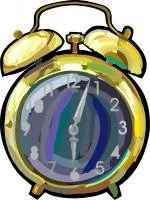
Interestingly, although I sleep longer now, I still keep a pile of papers on the left side of my desk. Today’s stack has little to do with budgets, personnel issues, or committee meetings, though. Instead, it contains notes for upcoming doctor appointments, insurance forms, and, at the moment, a draft of my will waiting to be finalized and signed.
I suppose that’s what retirement has given me. Not simply more time, but a different relationship to time. For most of my adult life, my days began because they had to. Today they begin when I’m ready. Whether that means I truly need more sleep or have finally been allowed to get the sleep I’ve always needed, I don’t know. But after all these years, I’m no longer quite so certain that I ever really understood my own clock.
Soundtrack Suggestion
Time is on my side, yes it is
Time is on my side, yes it is
Now you all were saying that you want to be free
But you’ll come runnin’ back (I said you would baby)
You’ll come runnin’ back (like I told you so many times before)
You’ll come runnin’ back to me, yeah
Time is on my side, yes it is
Time is on my side, yes it is
(“Time Is On My Side” — Rolling Stones)
Fully Unsupervised
I’ve written previously about the isolation and loneliness that can accompany the life of a single old guy. But one of the more attractive aspects of being entirely unattached is the freedom to make decisions that may appear non-logical, impulsive, or perhaps just plain crazy. I’m accountable to no one. I can go a little nuts whenever I want, and there is no one around to intervene.
A recent example comes to mind.
So there I was, innocently watching television, when a Subaru commercial appeared featuring the redesigned 2026 Crosstrek. Now, I have owned three Subarus over the years: a 1999 Forester, a 2007 Forester, and my current 2020 Crosstrek. Naturally, I paid attention.
Wow, lookin’ good, I thought.

On a whim, I picked up my iPad, visited the website for our local Subaru dealership, and began browsing inventory. Before long, I found myself looking at a blue 2026 Crosstrek and noticing a button inviting me to receive an online trade-in quote for my current vehicle. Foolishly, I took the bait. I answered a few questions, anticipating that they might respond with either an attractively optimistic number, or at least a reasonable range.
Instead, what followed was a parade of generic emails from the dealership’s “internet sales” department, none of which really answered my question. I replied more than once, attempting to redirect the conversation back toward the trade-in value. Eventually, an actual human being emailed me with a range.
The low end was mildly discouraging. The high end, however, got my attention.
More emails followed. Eventually, they persuaded me to stop by so they could evaluate the car in person. While my Crosstrek was out being test-driven, the salesman asked whether he could also put together numbers on a new vehicle.
I shrugged and said “sure.”
What came back was disappointing. They valued my trade-in (low mileage! very clean!) at the absolute bottom of the quoted range while simultaneously presenting a rather ambitious price for the new Crosstrek that most interested me. So I walked.
To be fair, I had warned them from the beginning that I was mostly window shopping and not particularly serious about buying a car right now. The sales manager followed up afterward, and I reiterated that point. I also informed him, diplomatically enough, that the salesman he had assigned me was not someone from whom I would ever purchase a vehicle.
More emails followed.
Would I consider a used vehicle? A different trim level? Another salesperson? (“I have just the guy.”)
And honestly, the sales manager seemed sincere. (Or am I just naïve?) He appeared genuinely interested in finding a way to make a deal happen. So I kept casually browsing inventory online and eventually noticed another Crosstrek that checked most of the boxes, especially the safety-related features I cared about. I agreed to come back in, meet Joseph, the alternate salesman, and take a test drive.
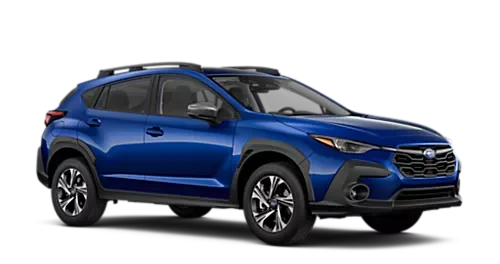
2026 Subaru Crosstrek Premium
Well, of course, that was doom.
The new interior was even more cockpit-like than my current car. It drove beautifully. It looked terrific. The entire thing felt smooth, quiet, and just futuristic enough to flatter me into imagining myself as the sort of person who should own one.
I agreed to let them run the numbers again.
I still balked. The trade-in figure remained lower than I wanted, and I had become increasingly fixated on including an extended warranty in any final deal. One of my thoughts at that stage was this: if I could get a new car with a seven-year warranty, I would probably be set, vehicle-wise, until age 86. (Honestly, who knows if I will even be alive that long, much less still driving?! But this did feel like a legitimate plan.)
So naturally, we went back and forth on the numbers for a bit. Eventually, they came close enough to the bottom-line figure I had in mind and, after a very long afternoon, I drove off the lot in a new 2026 Crosstrek.
There was no one around to question my choices. Or stop me. Freedom and loneliness, it turns out, often arrive as part of the same package.
Soundtrack Suggestion