
Is This How I Die?
I have walked almost every day for over forty years, including the past twelve on Eugene’s Ruth Bascom Riverbank Path System. I’m now retired and these walks remain essential to both my physical and emotional health, but the path no longer feels as safe as it once did. Several years ago, I began hugging the right side out of fear that a speeding cyclist might run me over. With e-bikes now racing along the same shared space, my concern has become even more urgent and I ask: Is this how I die?

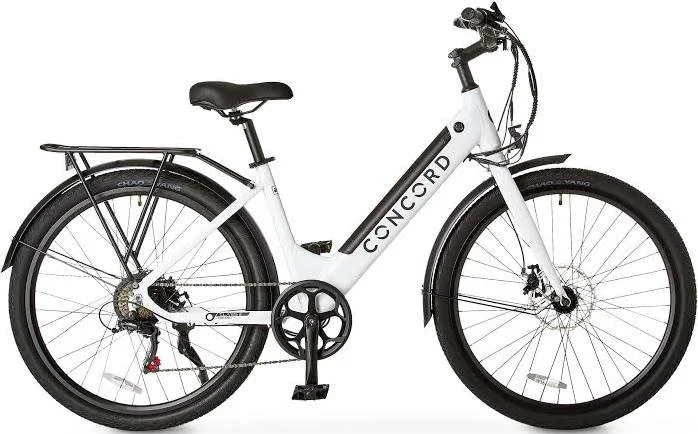
That scenario seems even more plausible after the September 8 report in Lookout Eugene-Springfield about the planned overhaul of PeaceHealth Rides, our local bike-share program. Its operator hopes to replace the current fleet with 400 to 500 new bicycles by spring 2028, likely divided evenly between conventional bicycles and e-bikes. The e-bikes would have maximum speeds between 15 and 20 miles per hour. This could put 200 to 250 city-sanctioned e-bikes into circulation, including in the hands of first-time and inexperienced riders.
But let’s take a step back. Before Eugene embraces any such expansion, we should be clear about what an e-bike is. Oregon recognizes three classes, two of which stop providing electric assistance at 20 miles per hour. Class 3 provides pedal assistance up to 28. Then there are e-motos, powerful electric motorcycles often mistaken for e-bikes. Eugene says a throttle-powered vehicle without usable pedals is not legally an e-bike, even if its maximum speed is 28 miles per hour or less. E-motos are prohibited on Eugene paths, sidewalks, bike lanes and park trails.
On a shared path, Eugene says e-bike riders should travel no faster than 12 miles per hour when other people are present. Twenty miles per hour is allowed only when the rider is alone on the path. Cyclists must yield to walkers, pass on the left and give an audible warning. E-bikes are prohibited on sidewalks, and riders must be at least sixteen years old.
Despite the prevailing rules and laws regarding e-bikes, however, I don’t think concerns about my personal well-being are unreasonable. There are increasing numbers of reports surfacing that e-bikes are responsible for serious injuries to pedestrians. For example, earlier this year an 81-year-old Vietnam vet in Orange County, California, was killed by a 14-year-old driving recklessly on an electric motorcycle.
And then there is well-documented evidence about the negative consequences to e-bike riders themselves. An August 2026 NBC News report found that emergency-room visits involving e-bike and e-scooter injuries among children and teenagers had increased by more than 600 percent in three years. Head and neck injuries were among the most common. A Wisconsin pediatric emergency physician said accidents he once saw only occasionally had become a daily occurrence.
The local figures are equally sobering. As the Register-Guard reported in August, PeaceHealth Sacred Heart Medical Center treated 13 people for e-bike injuries in 2023 and 48 in 2025, an increase of roughly 250 percent. More than half of the injured riders in both years reportedly were not wearing helmets. Doctors are treating broken ribs, fractures, severe head injuries and facial trauma once associated mainly with motorcycles.
I recognize that many riders use e-bikes responsibly and that the technology can replace car trips or make cycling possible for older adults and people who are unable to ride conventional bicycles. A properly managed bike-share program might offer some advantages over privately-owned machines. But before adding hundreds of e-bikes, PeaceHealth Rides and its public partners should explain how they will verify riders’ ages, teach path rules, enforce the 12-mile-per-hour limit and respond when rented machines are used recklessly.

That Lookout report raises an even more alarming red flag. Brodie Hylton, executive director of Cascadia Mobility, said future options might include e-scooters or what he called a “pedalless e-bike.” Under Eugene’s own published definition, however, a throttle-only vehicle without usable pedals is not an e-bike. If officials are considering such vehicles, they must say precisely what they are proposing, where the vehicles could legally be ridden and how they would be kept off prohibited paths. A catchy new label cannot turn an electric motorcycle into a bicycle.
To keep both riders and pedestrians safe, Eugene needs more than a website, signs, educational campaigns and polite reminders. The city needs visible enforcement, including speed monitoring, citations for reckless riding and meaningful consequences for illegal e-moto use. Any PeaceHealth Rides expansion should include enforceable speed controls, clear identification of each vehicle and a system for suspending users who endanger others.
Rules that are not enforced are merely suggestions, and these suggestions offer little real protection to me as I walk beside the river. Eugene should address these issues before spending millions of dollars and placing hundreds of additional electric vehicles on our bike paths. It should not wait for me (or any other innocent bystander) to be killed before deciding that enforcement matters.
Editing Note: After posting a version of this essay on September 7, 2026, the very next day
Lookout Eugene-Springfield reported out on the developments with PeaceHealth Rides.
I subsequently revised the piece, and the final version is what you find above.
Update on September 15, 2026:
This essay, in a slightly-edited form, was published as a Guest Column in the Lookout Eugene-Springfield today.
Soundtrack Suggestion
How could I forget to mention
The bicycle is a good invention
Sitting there in a silent movie
Beside the only girl who really ever knew me
Happy days, but sad I’m facin’
Heaven knows I’m on the case, oh
How could I forget to mention the bicycle?
(“Bicycle Song” — Red Hot Chili Peppers)
Fully Unsupervised
I’ve written previously about the isolation and loneliness that can accompany the life of a single old guy. But one of the more attractive aspects of being entirely unattached is the freedom to make decisions that may appear non-logical, impulsive, or perhaps just plain crazy. I’m accountable to no one. I can go a little nuts whenever I want, and there is no one around to intervene.
A recent example comes to mind.
So there I was, innocently watching television, when a Subaru commercial appeared featuring the redesigned 2026 Crosstrek. Now, I have owned three Subarus over the years: a 1999 Forester, a 2007 Forester, and my current 2020 Crosstrek. Naturally, I paid attention.
Wow, lookin’ good, I thought.

On a whim, I picked up my iPad, visited the website for our local Subaru dealership, and began browsing inventory. Before long, I found myself looking at a blue 2026 Crosstrek and noticing a button inviting me to receive an online trade-in quote for my current vehicle. Foolishly, I took the bait. I answered a few questions, anticipating that they might respond with either an attractively optimistic number, or at least a reasonable range.
Instead, what followed was a parade of generic emails from the dealership’s “internet sales” department, none of which really answered my question. I replied more than once, attempting to redirect the conversation back toward the trade-in value. Eventually, an actual human being emailed me with a range.
The low end was mildly discouraging. The high end, however, got my attention.
More emails followed. Eventually, they persuaded me to stop by so they could evaluate the car in person. While my Crosstrek was out being test-driven, the salesman asked whether he could also put together numbers on a new vehicle.
I shrugged and said “sure.”
What came back was disappointing. They valued my trade-in (low mileage! very clean!) at the absolute bottom of the quoted range while simultaneously presenting a rather ambitious price for the new Crosstrek that most interested me. So I walked.
To be fair, I had warned them from the beginning that I was mostly window shopping and not particularly serious about buying a car right now. The sales manager followed up afterward, and I reiterated that point. I also informed him, diplomatically enough, that the salesman he had assigned me was not someone from whom I would ever purchase a vehicle.
More emails followed.
Would I consider a used vehicle? A different trim level? Another salesperson? (“I have just the guy.”)
And honestly, the sales manager seemed sincere. (Or am I just naïve?) He appeared genuinely interested in finding a way to make a deal happen. So I kept casually browsing inventory online and eventually noticed another Crosstrek that checked most of the boxes, especially the safety-related features I cared about. I agreed to come back in, meet Joseph, the alternate salesman, and take a test drive.

2026 Subaru Crosstrek Premium
Well, of course, that was doom.
The new interior was even more cockpit-like than my current car. It drove beautifully. It looked terrific. The entire thing felt smooth, quiet, and just futuristic enough to flatter me into imagining myself as the sort of person who should own one.
I agreed to let them run the numbers again.
I still balked. The trade-in figure remained lower than I wanted, and I had become increasingly fixated on including an extended warranty in any final deal. One of my thoughts at that stage was this: if I could get a new car with a seven-year warranty, I would probably be set, vehicle-wise, until age 86. (Honestly, who knows if I will even be alive that long, much less still driving?! But this did feel like a legitimate plan.)
So naturally, we went back and forth on the numbers for a bit. Eventually, they came close enough to the bottom-line figure I had in mind and, after a very long afternoon, I drove off the lot in a new 2026 Crosstrek.
There was no one around to question my choices. Or stop me. Freedom and loneliness, it turns out, often arrive as part of the same package.
Soundtrack Suggestion
Baby, you can drive my car
Yes, I’m gonna be a star
Baby, you can drive my car
And maybe I’ll love you
Beep-beep, beep-beep, yeah
(“Drive My Car” — The Beatles)
The Observer Effect
Can You Hear Me Now?

Here’s a rather timeless question: If a tree falls in a lonely forest and no one is there to hear it, does it make a sound? This issue has engaged philosophers for centuries and has given rise to considerable scholarly debate.
Lately I have begun to wonder whether the internet has produced a modern version of a similar philosophical problem, specifically with regard to blogging. If a person writes essays that remain virtually unread, does the blog really exist?
One might imagine that such a question could be addressed, at least somewhat marginally, with data. We live in the age of analytics, after all. Somewhere inside the mysterious machinery of the internet, numbers are quietly crunched: page views, visitor counts, geographic locations, and other tidy bits of data gradually accumulate in the background. Naturally, I occasionally check the available statistics here on Musings.
What I find here can best be described as modest evidence of human life. Sometimes one of my posts appears to have attracted three visitors. Two of those visits are almost certainly me, returning to see whether a typo escaped my notice before I published. The third might represent an actual reader. Or possibly a search engine robot conducting routine surveillance of the digital landscape.

But every now and then the analytics reveal something more mysterious. A recent visitor with an IP address from the Seychelles, for example. I try to imagine this person: someone on a small island in the Indian Ocean who has paused long enough to read a reflective essay about time, memory, or late-life philosophy written by a retired higher-ed guy in Oregon. It is a pleasant thought. Unfortunately, of course, it is most likely a bot.
These observations suggest that the deeper philosophical issue may lie elsewhere. René Descartes famously attempted to anchor human existence in a single undeniable truth: Cogito, ergo sum. I think, therefore I am. The act of thinking itself confirmed the existence of the thinker.
Modern physics introduces yet another wrinkle. In quantum mechanics, the Uncertainty Principle suggests that the act of observation influences what is being observed. At the smallest scales of reality, the observer and the observed become entangled in curious ways. The observer becomes part of the phenomenon.
All of this raises an unsettling possibility for bloggers: perhaps a post does not fully exist until someone reads it.

For the modern blogger, then, a similar formulation might present itself: Scribo, ergo sum. I write, therefore I am.
But writing on the internet introduces a complication Descartes never had to consider. Descartes lived in an era when publishing assumed an audience. In our era, it is entirely possible to write something, place it carefully on a beautifully designed website — yes, I am talking about TechnoMonk’s Musings here — and discover that the universe has responded with a deafening silence.
This raises a subtle question. If writing is placed before the world but no one encounters it, what exactly has occurred? Is the blog an act of communication, or merely a private journal that just happens to possess a URL?
Perhaps the older philosophical puzzle offers a clue. A tree falling in the forest still disturbs the air, shakes the ground, and settles into the soil whether anyone happens to be standing nearby to hear the sound. The event takes place regardless of observation.
So let’s consider this: Writing may work much the same way. Thoughts take shape. Words accumulate. A small archive of a life gradually forms, essay by essay. Whether the audience is large, small, or occasionally located in the Seychelles may be only an incidental matter.

Descartes had certainty: Cogito, ergo sum.
I think, therefore I am.
Physicists have uncertainty; and so do I. Scribo, ergo sum.
I write, therefore I might be?
Whether anyone can hear me now is another question entirely.
Soundtrack Suggestion
I can see clearly now, the rain is gone
I can see all obstacles in my way
Gone are the dark clouds that had me blind
It's gonna be a bright (bright), bright (bright)
Sun-shiny day
It's gonna be a bright (bright), bright (bright)
Sun-shiny day
I think I can make it now, the pain is gone
All of the bad feelings have disappeared
Here is the rainbow I've been prayin' for
It's gonna be a bright (bright), bright (bright)
Sun-shiny day
(“I Can See Clearly Now” — Johnny Nash)
The Monk Persists

I built this blog on Thanksgiving Day, 2005. From scratch. In a single afternoon.
That first version is likely something archaeologists of the early internet might excavate from a dead server farm somewhere. Remember, this was before Facebook. Before Twitter. Before podcasts. Before we were all gently coerced into becoming “content creators,” feeding platforms whose names would eventually become verbs.
Back then blogging was its own ecosystem. Independent. Slightly nerdy. Sometimes thoughtful. Often opinionated. For some weird reason, I wanted in.
On that first day I explained how I came to call myself “TechnoMonk.” The name originated with a friend who once observed that my home furnishings were distinctly Spartan, while my investment in cameras, computers, and sound equipment was anything but. The term stuck; I’m still a gadget enthusiast.
The original blog was hosted by Blogger, and lived on a Comcast server under the domain technomonk.us. It was free, which seemed appropriate for what was then essentially a self-indulgent side project. Over time I discovered that “free” came with aesthetic constraints, sketchy support, and documentation that was likely composed by a tech guy with limited social skills. After almost a year of muttering at the screen, I decided to move on.

In October 2006 I adopted the domain technomonksmusings.com and migrated everything to Squarespace, where it has remained ever since. That first transition was not seamless. Files were exported and imported; some did not survive the journey. Lessons were learned. Patience was tested. A few agonizing weeks passed.
Eventually the site settled into Squarespace’s v5 platform, where it has lived for many years. The design remained largely unchanged. I described this to myself as “clean and timeless.” It may also have been “aging quietly.” At this point, my blog is older than many current, well, what-do-you-call-them, “influencers.”
What changed over time was my understanding of what this space represented. What began as a modest vanity project gradually became something more substantial: a personal archive. It now contains reflections on work, institutional politics, relationships, travel, aging, grief, loss, rejection, existential angst, and yes, a fairly steady stream of complaints. I have never curated commentary particularly carefully.
Version 5, however, has reached its twilight. Support is minimal. Editing began to feel like maintaining a museum exhibit devoted to mid-2000s web design. So the options became clear: let it fade away, archive it imperfectly, or migrate again.
But I remembered 2006. The mere thought of another migration made my shoulders tighten. The move to Squarespace 7.1 would preserve the content, but the site itself would need rebuilding. Every post would require reformatting. One. By. One. Add in the predictable dry eyes from too many hours at a screen, and it all began to feel like a full-contact sport.
And yet, here we are.

The transition is complete. The layout is cleaner. The font is slightly larger, which my fellow senior citizens should appreciate. Underneath, the structure is sturdier and far less temperamental.
Two domain names. Three platforms. Twenty years.
Not bad for something launched on a whim in a sparsely furnished home office with just my computer and one crazy idea.
So: thank you for stopping by, whether you’ve been here since 2005 or arrived somewhere along the way. I can’t promise frequency. I can promise that when something feels worth saying, it will appear here.
The Monk persists.
Soundtrack Suggestion
It’s quite apparent
Your grammar’s errant
You’re incoherent
Saw your blog post
It’s really fantastic
That was sarcastic
’Cause you write like a spastic
I hate these Word Crimes
Your prose is dopey
Think you should only
Write in emoji
(“Word Crimes” – “Weird Al” Yankovic)
The Only Winning Move
“A strange game. The only winning move is not to play.” [The WOPR computer at the conclusion of “War Games” (1983).]

“War Games” is a 1983 movie starring Matthew Broderick, Ally Sheedy, John Wood and Dabney Coleman. I fell in love with this film the first time I saw it, at the State Theater in downtown Corvallis, during the first week of its release. A friend of mine had dropped by my apartment and said, “let’s go see ‘War Games’.” I hadn’t heard of it, but I said, “sure, ok.” (1983 is a couple of years before I first touched the keyboard and mouse of an Apple Macintosh, but I was, perhaps, influenced by this film, in the direction of my now long-time interest in computers.)
This is the story of a high school student, David Lightman (a stunningly-young Matthew Broderick, pre-Ferris-Bueller), an intelligent, but somewhat-naïve, underachiever with an interest in computers and computer games. He gets caught up in a dramatic, but mostly-unrealistic, scenario whereby he almost causes the end of the world by initiating WW III. The primary setting is Seattle, WA.
I watched this movie again this week (now available on Max) for maybe the tenth or fifteenth time. I think it’s totally fascinating to see the world portrayed as it existed in the Cold War era, before September 11th, and prior to the technology that we all now take for granted. How did we even exist in the pre-internet era of floppy discs and dime-eating pay phones!?
In search of the latest computer game by an outfit called ProtoVision, David searches for all the phone-modem-equipped computers in Sunnyvale, CA, and stumbles upon a Defense-Department machine called the WOPR (“War Operation Plan Response” – it’s pronounced like the Burger King sandwich, “whopper”). He ultimately finds a way into this machine via a back-door password left there by the original designer. The WOPR believes, therefore, that David is “Professor Falken,” its creator. Now posing as the Professor, he finds the game programs on this machine and elects to play, not chess, not poker, but rather something called “Global Thermonuclear War.” David chooses the side of the USSR in the conflict and initiates a nuclear strike on the US.
