
My Own Clock
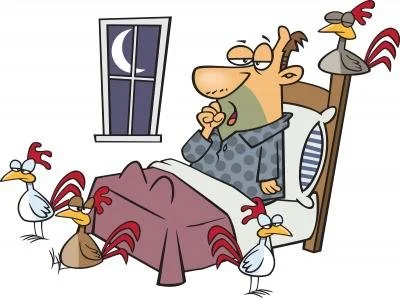
For most of my adult life, I believed I was a morning person. Whether I was working as a chemist in my twenties, attending graduate school in counseling in my thirties, teaching while completing my Ph.D. at Indiana University in my forties, or later serving as a college administrator, I was typically up and at ’em by 5:30 a.m. I assumed that was simply who I was: an early riser, a morning person. It has taken retirement to make me question whether the clock I lived by for so long was ever really my own.
As I look back, I recognize that my sleep pattern was among many rituals which remained remarkably consistent throughout my professional life. For example, I often stopped for breakfast on the way to work before arriving at an office that was mostly empty. How I valued that quiet first hour. The phone wasn’t ringing. Meetings hadn’t begun. No one was standing in the doorway with an urgent question. It gave me time to get oriented before the demands of the day took over.
I recall that during my years at IU, associate instructors could request the sections we wanted to teach. I always chose the 8:00 a.m. classes. Most of my graduate-student peers preferred something later, and undergraduates weren’t especially enthusiastic about early mornings either (an obvious understatement). That suited me just fine. I loved beginning the day before campus had fully awakened.
Then there was another idiosyncratic practice of mine. For years, on the left side of my desk, I kept a stack of papers. The issues demanding the most immediate attention were always on top. I continually shuffled them, working my way down as the day allowed. Those near the bottom sometimes waited for days or even weeks. More than once, a problem resolved itself before I ever reached it. (That strategy, in itself, continues to serve as a valuable personal and professional axiom: not every problem requires immediate action, and some require no action at all.) Like my early mornings, that stack became part of the architecture of my days.
Of course, there were occasional outside interruptions to my rhythms. Beginning in the late 1990s, an enlarged prostate led to increasingly problematic sleep. Four or five trips to the bathroom each night became routine. A TURP (the “roto-rooter” prostate surgery) procedure in 2011 helped enormously, but years of interrupted sleep had trained my body to wake repeatedly. Even after this medical issue improved, the habit of frequent awakenings lingered. But throughout it all, I remained an early riser.
Ultimately, retirement had its impact on my lifestyle. While there was no conscious decision to sleep in later, there simply was no longer a reason to get up before dawn. Without really intending it, I began getting up a little later. And then later.
Today I’m usually asleep by 10:00 and awake around 7:30, about two hours more sleep than during most of my working life. At age seventy-nine, I now sleep considerably more than I once did. That surprised me because I’d always heard that older adults need less sleep. Curious, I did a little reading and discovered the research isn’t nearly as settled as the popular wisdom suggests.
While I was at IU, one of my closest friends seemed to function quite well on four or five hours of sleep each night, but I always needed much more. We were both a little skeptical of the other’s sleeping habits. I couldn’t imagine getting by on so little sleep, and he probably thought I was a slacker. Looking back, I guess each of us believed our own rhythms to be the “normal” ones.
What has stayed with me, though, isn’t the research itself or the sleeping habits of others. Rather, different questions altogether poke through. If my body now prefers a schedule so unlike the one I had followed through most of my adult life, what’s changed? Has retirement simply given me permission to sleep more? Or had I spent decades assuming that my work schedule reflected my natural rhythm when, in fact, I had gradually adapted myself to the rhythms of the institutions where I worked?
For more than half a century, my life was organized around the schedules of schools, colleges, and universities. Over time, those rhythms became so familiar that I stopped noticing they belonged to the institutions where I worked. I experienced them as my own. I believed I was someone who naturally woke at 5:30 every morning. Maybe I was. Or maybe I had simply spent decades living by rhythms that were never entirely mine?
Interestingly, although I sleep longer now, I still keep a pile of papers on the left side of my desk. Today’s stack has little to do with budgets, personnel issues, or committee meetings, though. Instead, it contains notes for upcoming doctor appointments, insurance forms, and, at the moment, a draft of my will waiting to be finalized and signed.
I suppose that’s what retirement has given me. Not simply more time, but a different relationship to time. For most of my adult life, my days began because they had to. Today they begin when I’m ready. Whether that means I truly need more sleep or have finally been allowed to get the sleep I’ve always needed, I don’t know. But after all these years, I’m no longer quite so certain that I ever really understood my own clock.
Soundtrack Suggestion
Time is on my side, yes it is
Time is on my side, yes it is
Now you all were saying that you want to be free
But you’ll come runnin’ back (I said you would baby)
You’ll come runnin’ back (like I told you so many times before)
You’ll come runnin’ back to me, yeah
Time is on my side, yes it is
Time is on my side, yes it is
(“Time Is On My Side” — Rolling Stones)
Time For a Change
This is the op-ed I published in the Eugene Weekly, April 17, 2025
I think it’s time we vote to reconstitute the Lane Community College Board of Education in May’s special election. The reason: this Board is completely dysfunctional with its current six-member configuration. The Eugene Weekly covered the painful machinations of this body in January, and what follow is my take…
When Lisa Fragala, a veteran LCC Board Member, was elected to the Legislative Assembly last November, she immediately resigned her position on the Board. Very soon thereafter a notice appeared on the LCC website announcing that there was an opening for the vacated position and that the College was seeking applicants from among Lane County voters. According to Board policy 2110 “When a vacancy is declared … the remaining board members shall meet and appoint a person to fill the vacancy from any of the electors of the district…”(emphasis mine).

I was one of four applicants for this slot. I am a retired, career higher-education administrator, having served, for example, with the Oregon University System for several years as the primary liaison to the state’s community colleges and the System’s policy expert on transfer-student activity. When that position ended, I spent a decade as a community college academic dean. In retirement, I have been a part-time LCC faculty member, during which time I was an officer in the faculty union and a member of the College’s Budget Development Subcommittee.
I thought I had a lot to offer to the Board and gave it my best shot during the interview process. However, I had read the application materials of my fellow candidates, watched their interviews, and would have been delighted to have had any of us appointed; we were a very strong pool from which to choose. As stated above, according to Board policy, members had the obligation to fill the position and make itself a whole, seven-member governing body.
During a Zoom meeting on December 16, 2024, the Board agreed to a process for making the selection that included a ranking system for candidates. Then, at the December 18 meeting, all four applicants were interviewed in person. In the first round of applicant ranking, three Board members voted for one candidate as their first choice (Jesse Maldonado), two voted for another (Bob Brew). Neither Dan Isaacson nor myself received any first-place votes. Even with this split, though, I imagined that reason would prevail and either Mr. Brew or Mr. Maldonado would be chosen. Four votes would be needed to appoint.
However, as the discussion proceeded, two Board members refused to rank the candidates, clinging to their one and only choice. In an even more egregious action, one member removed herself from participating entirely and even left the room during voting. The result was that, in spite of our qualifications, no candidate prevailed and the Board left the seat vacant in violation of their own policy and prior practice.
Then, subsequently , during the January 8, 2025, Board meeting, at the urging of Board Member Austin Folnagy, there was yet another (entirely painful and embarrassing) discussion of the selection process. A “motion to rescind” went nowhere and the position continued to remain vacant.

Finally, much to my surprise, at the April 2 meeting, this time at the urging of Board Chair Zach Mulholland, the matter was revisited yet again. Mr. Mulholland took the position that Jesse Maldonado should be now appointed to Position 7 since he is the only candidate from the original pool to throw his hat into the ring for election in May. This suggestion seemed like a no-brainer to me: yes, onboard Mr. Maldonado now so he wouldn’t have to wait until July 1. He is both a known quantity (having already interviewed) and is running unopposed.
Did this Board now do the logical thing? Nope, not a chance. With another three/three deadlock, the position continues to remain unfilled until after the election. The discussion preceding this vote was entirely cringe-worthy. Go find it on YouTube and then ask yourself if this is the group you want to represent the citizens of Lane County and making decisions (or not) about our College. I certainly have an answer for you. So here are my May-election recommendations, which will give us three new members.
Zone 1: Jerry Rust
Zone 3: Devon Lawson
Zone 4: Austin Folnagy (incumbent)
Zone 7: Jesse Maldonado
However, whatever you do, please vote. I know these are not the most high-profile races. Mail those ballots in! I think we all have an idea about what happens when citizens decline to participate in our beloved democratic process.
On Loneliness
“Loneliness is far more than just a bad feeling… It is associated with a greater risk of cardiovascular disease, dementia, stroke, depression, anxiety, and premature death. The mortality impact of being socially disconnected is similar to that caused by smoking up to 15 cigarettes a day, and even greater than that associated with obesity and physical inactivity.” – Dr. Vivek Murthy (U.S. Surgeon General)

I retired from full-time employment in 2014, at age 67. It wasn’t that I thought it was really my time to move on – rather my employer believed it was. I was working as an academic dean, at a community college in the Bay Area, and the administration that had hired me, well, those folks were long gone. The new president didn’t take any time to get to know me and was more interested in putting in his own administrative team. Therefore, I was toast.
So, after receiving official notice that my contract was not being renewed, hastily evaluating my financial situation, and determining that retirement was at least theoretically possible, I packed up and moved back here to Oregon. After all, I had spent a considerable portion of my life in Corvallis and Eugene and my thinking was that there were folks here that would constitute some kind of community for me: that I wouldn’t be totally devoid of a support system.

Flash forward to present day: I’m now 76, and while it’s true that I’m not entirely without a support network, it’s turned out to be a pretty meager one. I have lunch once a month with an old friend from my photography days and about once a year with former Oregon University System colleagues. I made new friends when I spent three years as a part-time faculty member here recently (2019-2022), but now that that position has ended, I now rarely see those folks. I have kept in contact with Katrina (mentioned previously in my writings here; she is the person named in my Advance Directive), but she has her own very busy life and we communicate primarily, and fairly infrequently, by text. I have a Zoom session with an old high-school friend from Wisconsin once every couple months or so. And finally, I admit I had high hopes for real and sustained human connection when I was in a relationship for about three years, but that ended last year and left me alone and grieving.
Given that the pandemic is largely in our rearview mirror, I have once again started spending time here at my neighborhood Starbucks. It’s not really community, per se, but as I sit here writing this, there are the sounds of work, conversation and occasional laughter. There are college students at the next table studying for, what I assume, their final exams. It’s true that I don’t actually meet people here, but it provides some sense of comfort: probably for the same reason that, when at home, I keep the TV or radio on most of the time; the NPR hosts and the news anchors at MSNBC keep me company. Fortunately, right now I have part-time work, in a tech-support role, at the college, that physically puts me in the classroom and in contact with instructors and students, for a few hours a week. That tends to keep me going.

I fear that I am one of the individuals that the Surgeon General speaks of in terms of the “loneliness epidemic.” I am more socially isolated than is really healthy. I know for sure that I am touch-starved. I’m pretty sure that, at this rate, I’m destined to be alone at the end.
For now, I guess I'll just keep breathing, walking, writing – and remain open to whatever comes next.
(Apologies for my prolonged absence here.)
Soundtrack Suggestion
When I was young
I never needed anyone
And making love was just for fun
Those days are gone
Livin' alone
I think of all the friends I've known
But when I dial the telephone
Nobody's home
All by myself
Don't wanna be
All by myself
Anymore
("All By Myself" - Eric Carmen)
Elvis Has Left the Building
As I make an attempt to revive my activity here at Musings, after an extended hiatus, I reproduce below an edited version of a Facebook post I wrote in July of 2014.
------------------------------------------
I should officially announce to y’all that I have made a major transition in my life. After nineteen consecutive years as a higher education administrator (the last ten as a community college dean), I have moved on.
I am retired and have physically relocated from Larkspur, California, to Eugene, Oregon … the place on earth that feels most like “home.” I arrived back here on July 1 (2014).
In the spirit of full disclosure, this whole retirement gig was not exactly my idea. (What? Me retire?) It was the path I chose to pursue when my position (Dean of Math & Sciences) at the College of Marin was no longer available to me. The official act dealt with the “non-renewal of my annual contract” … an avenue the president went down with three senior administrators this year. So, I signed up for an early-retirement plan, packed up my shit, and blew that pop stand.
As some of you are aware, I found my role as a community college dean a challenging one. When I left the Oregon University System Chancellor’s Office in 2004 (after a totally politically-motivated reorganization that left many of us devastated), I was warned about the hazards of a dean’s job on a community-college campus. As it turns out, the information I had been provided was frighteningly accurate. At three different community colleges, in two states, over ten years, the storyline was a lot the same: petty campus politics; huge amounts of conflict; rampant dysfunction; and an above-average percentage of mean people. These environments had the effect of deflating my spirit and led me to question the decisions I had made along the way to remain an educator. It all seemed so totally contradictory to the life I thought I had signed up for and, over time, I became increastingly jaded.
However, I survived then, and I’m surviving now. The future is looking brighter and brighter every day, even though I’m still viewing the job-loss experience through the lenses of rejection and betrayal.
